
Other Topic
10 Moral Stories in Easy English – Part 4
Choose a story and take a quiet reading break. These simple retellings add scenes and dialogue to familiar tales. Some English endings are gentler for children.
Each English story, lesson and reader question takes about three minutes at a slow pace of about 120 words a minute. Your reading time may be different.
The earlier short Hindi and German versions are kept below each story, where available. They may use different details or endings. Open the language section you want to read.
Choose a story
- The Blind Men and the Elephant
- The Farmer and the Magical Bird
- The Old Man and the Fig Tree
- The Weaver’s Dream
- The Two Seeds
- The King and the Spider
- The Sack of Faults
- The Talking Cave
- The River and the Desert
- The Mirror of Truth
1. The Blind Men and the Elephant
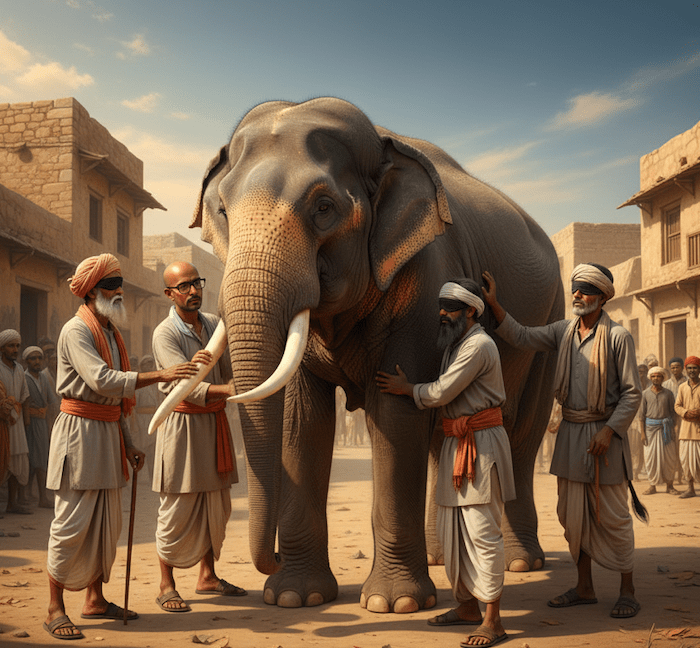
English story
Six friends heard that an elephant was visiting their village. They were blind and wanted to learn about the animal by touch.
The elephant’s keeper welcomed them. He helped each person stand in a safe place beside the calm animal.
The first friend touched its broad side.
“An elephant is like a wall,” he said.
The second felt a tusk. “No. It is long and hard, like a spear.”
The third touched the trunk. It moved gently. “You are both wrong. It is like a large snake.”
The fourth felt a leg and thought of a tree. The fifth touched an ear and described a fan. The sixth held the tail and said it was like a rope.
Soon they were all talking at once.
“I touched it myself,” one said. “I know.”
“So did I,” another replied.
Each had learned something real. But each had touched only one part.
Their voices grew louder until the keeper asked them to pause.
“Did any of you touch the whole animal?” he asked.
The friends became quiet.
“No,” said the first. “I could only reach this side.”
The keeper invited them to listen to one another. Then, with his guidance, they learned about the other parts too.
The friend who described a wall felt the ear. The friend who described a rope learned about the strong legs.
Their ideas did not become useless. They became parts of a larger picture.
On the walk home, one friend laughed softly.
“I was sure I knew everything.”
“You knew something,” another said. “You just did not know everything.”
They agreed to ask more questions the next time they disagreed.
The lesson was not about blindness. Anyone can mistake one small experience for the whole truth.
The lesson: Listen to other people. Your own experience may show only one part.
Think about it: When have two people described the same event differently? What could you ask before saying that another person must be wrong?
Earlier short Hindi version
हिंदी: अंधे और हाथी
छह अंधों ने एक हाथी के बारे में सुना और उसे छूकर समझना चाहा। पहले ने पहलू को छुआ और कहा,
"हाथी एक दीवार की तरह है!" दूसरे ने दाँत महसूस किया: "यह एक भाला है!" तीसरे ने सूंड पकड़ी:
"यह एक साँप है!" चौथे ने एक पैर छुआ: "यह एक पेड़ है!" पाँचवें ने कान महसूस किया: "यह एक पंखा है!" छठे ने पूँछ पकड़ी: "यह एक रस्सी है!"
उन्होंने जोरदार बहस की, हर कोई यकीन करता था कि वह सही है। गुजरते हुए एक बुद्धिमान राजा ने कहा, "तुम सभी सही हो, लेकिन केवल आंशिक रूप से।
एक हाथी ये सभी अंग मिलकर बनता है। सच्चाई जानने के लिए, तुम्हें सभी टुकड़ों को एक साथ रखना होगा।"
शिक्षा: हमारा व्यक्तिगत अनुभव हमें सच्चाई का केवल एक हिस्सा देता है।
बुद्धिमत्ता दूसरों की बात सुनने, विभिन्न दृष्टिकोणों को एकीकृत करने और संपूर्ण तस्वीर देखने से आती है।
Earlier short German version
Deutsch: Die Blinden und der Elefant
Sechs Blinde hörten von einem Elefanten und wollten ihn durch Berührung verstehen.
Der erste berührte die Seite und sagte: "Ein Elefant ist wie eine Wand!" Der zweite fühlte den Stoßzahn:
"Es ist ein Speer!" Der dritte hielt den Rüssel: "Es ist eine Schlange!" Der vierte berührte ein Bein:
"Es ist ein Baum!" Der fünfte fühlte ein Ohr: "Es ist ein Fächer!" Der sechste packte den Schwanz: "Es ist ein Seil!"
Sie stritten heftig, jeder überzeugt, dass er recht hatte. Ein vorbeikommender weiser König sagte: "Ihr habt alle recht,
aber nur teilweise. Ein Elefant ist alle diese Teile zusammen. Um die Wahrheit zu kennen, müsst ihr die Teile zusammensetzen."
Moral: Unsere persönliche Erfahrung gibt uns nur einen Teil der Wahrheit. Weisheit kommt
vom Zuhören, Integrieren verschiedener Perspektiven und dem Sehen des ganzen Bildes.
2. The Farmer and the Magical Bird
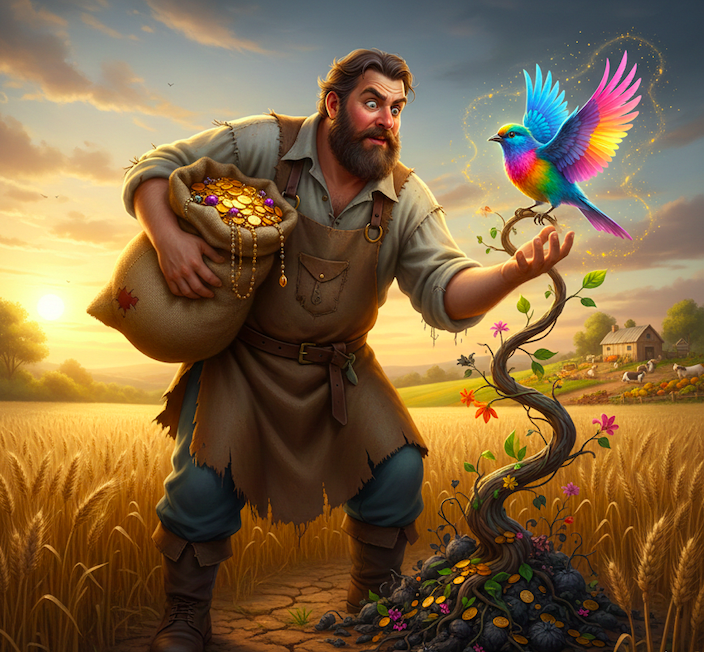
English story
A farmer found a small bird caught in a thorn bush. He gently freed it and gave it space to fly away.
The bird returned the next morning. In its beak was a bright stone.
“This is a gift,” it said. “You helped when you did not expect payment.”
The stone was a diamond. After selling it, the farmer could repair his roof and buy seed for his field.
For a while, he felt grateful. Then he began to imagine where the bird had found it.
“There must be more,” he thought.
He asked the bird to show him. At first, it refused. But he asked again and again.
At last, the bird led him to a cave. Bright stones lay inside.
“Take only what fits in one hand,” it warned. “Then leave.”
The farmer picked up a small handful. It was already more than he needed.
But another stone looked larger. Another shone more brightly. Soon his pockets were full, and his bag was heavy.
He bent for one last piece.
His bag caught on a rock. He pulled hard. Stones moved above him, and a deep sound filled the cave.
He dropped the bag and ran. The entrance fell behind him. The farmer escaped, but the treasure was buried inside.
Outside, the bird waited on a branch.
“I had enough before I entered,” the farmer said, breathing hard.
“Yes,” said the bird. “But you stopped seeing it.”
He walked home with empty hands. The repaired roof was still there. His seeds were waiting for the field. His life still held good things.
He could not undo his greedy choice. He could choose what to do next.
The following morning, he planted his seeds instead of searching for another secret cave.
The lesson: Knowing when you have enough can protect what matters most.
Think about it: What made the farmer ignore a clear warning? How can you pause before “just one more” turns a good choice into an unsafe one?
Earlier short Hindi version
हिंदी: लालची किसान और जादुई चिड़िया
एक गरीब किसान ने एक जादुई चिड़िया को बचाया। आभार में, चिड़िया ने उसे अपनी गुप्त गुफा से एक हीरा दिया, जिससे वह अमीर हो गया।
किसान खुश था जब तक लालच ने उसे घेर नहीं लिया। उसने गुफा का स्थान जानने की माँग की। चिड़िया ने अनिच्छा से उसे खजाने से भरी एक गुफा में ले गई।
"बस एक मुट्ठी जितना ले जा सकते हो उतना ही लो," उसने चेतावनी दी। किसान, लालच में अंधा होकर, अपनी जेबें, बैग
और यहाँ तक कि अपना मुँह भर लिया। वजन के नीचे संघर्ष करते हुए, वह लड़खड़ाया और गुफा के ढहने का कारण बना, खुद को फँसा लिया और सब कुछ खो दिया।
चिड़िया ने कहा, "मैंने तुम्हें संतोष की कुंजी दी थी। तुम्हारे लालच ने दरवाज़ा हमेशा के लिए बंद कर दिया।"
शिक्षा: संतोष असीमित धन से बड़ा खजाना है। लालच हमें अंधा कर देता है और हमारे अपने पतन की ओर ले जाता है।
Earlier short German version
Deutsch: Der gierige Bauer und der verzauberte Vogel
Ein armer Bauer rettete einen verzauberten Vogel. Aus Dankbarkeit gab ihm der Vogel einen einzigen Diamanten
aus seiner geheimen Höhle, wodurch er reich wurde. Der Bauer war glücklich, bis die Gier überhand nahm. Er verlangte,
den Ort der Höhle zu erfahren. Widerwillig führte der Vogel ihn zu einer Höhle, die überquoll vor Schätzen.
"Nimm nur so viel, wie du in einer Hand tragen kannst", warnte er. Der Bauer, überwältigt, stopfte seine
Taschen, seinen Beutel und sogar seinen Mund voll. Unter der Last kämpfend, stolperte er und löste einen Höhleneinsturz aus,
der ihn selbst gefangen nahm und alles verlor. Der Vogel sagte: "Ich gab dir den Schlüssel zur Zufriedenheit.
Deine Gier schloss die Tür für immer."
Moral: Zufriedenheit ist ein größerer Schatz als grenzenloser Reichtum. Gier macht uns blind
und führt zu unserem eigenen Untergang.
3. The Old Man and the Fig Tree
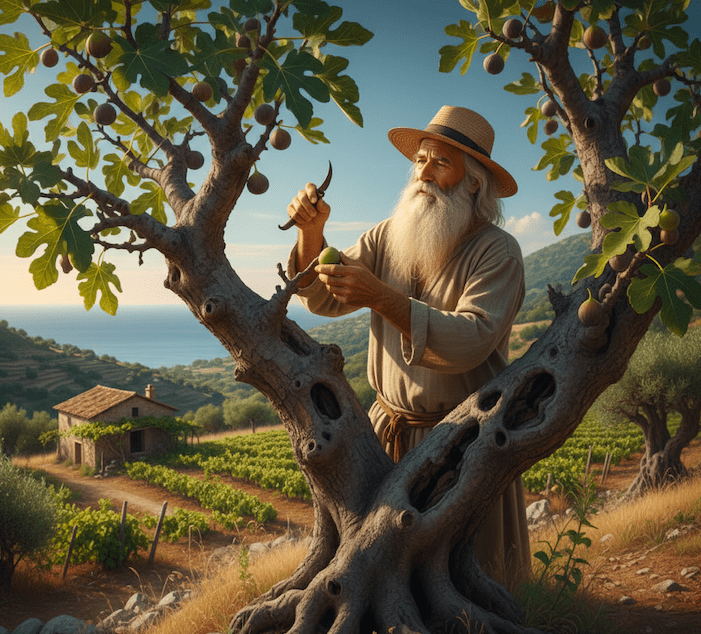
English story
An old man sat beside a fig tree each afternoon. The tree had few leaves now, and no fruit grew on its branches.
One day, a traveller stopped to rest nearby.
“Why sit here?” she asked. “That tree gives you almost nothing.”
The old man moved a little, making room beside him.
“It did not always look like this.”
He told her about a hot summer when he was young. The tree’s branches had given him shade after work. Later, his children had played nearby.
“When the fruit was ripe, we shared it with neighbours,” he said. “My youngest used to wait for the first fig.”
The traveller looked again at the rough trunk. A place that seemed empty now had once held many busy days.
“But those days are gone,” she said.
“Yes. That does not mean they had no value.”
The old man picked up a fallen leaf. He was not waiting for the tree to prove itself useful again. He was remembering what it had already given.
The traveller thought about a cup her grandmother had made. It was cracked now. She had kept it, though she never drank from it.
“Perhaps I understand,” she said.
They sat quietly until the air grew cooler.
Before leaving, the traveller asked whether she could bring water on her next visit. The old man thanked her.
In spring, she returned. A few small leaves had appeared on the tree. Between them grew one fig.
The old man smiled. He divided it carefully, and they shared it.
It was a small gift, not a return to the tree’s younger days. He would have visited even if no fruit had grown.
The traveller finally saw why that mattered.
The lesson: Value is not only what someone or something can give you today.
Think about it: Who has helped you in the past? How could you show thanks without asking them to do more? Remembering care can be a kind act too.
Earlier short Hindi version
हिंदी: बूढ़ा आदमी और अंजीर का पेड़
एक बूढ़ा आदमी रोज़ाना एक बंजर अंजीर के पेड़ के नीचे बैठता था। एक यात्री ने उसका मज़ाक उड़ाया,
"एक ऐसे पेड़ के नीचे क्यों बैठते हो जो न फल देता है न छाया?" बूढ़े ने जवाब दिया, "यह पेड़ मुझे छाया देता था जब मैं जवान था,
मेरे बच्चों के लिए फल देता था, और मेरी आग के लिए लकड़ी देता था। इसकी कीमत केवल आज जो देता है उसमें नहीं, बल्कि उस जीवनभर के उपहारों में है
जो इसने पहले ही दे दिए हैं। मैं अब कृतज्ञता से यहाँ बैठता हूँ।" प्रभावित होकर, यात्री भी सम्मान में चुपचाप उसके साथ बैठ गया। अगली वसंत ऋतु में,
बूढ़े पेड़ ने एक मीठा अंजीर उगाया—एक कृतज्ञ हृदय के लिए अंतिम उपहार।
शिक्षा: कृतज्ञता अतीत के आशीर्वादों का सम्मान करती है। वास्तविक मूल्य अक्सर वर्तमान उपयोगिता में नहीं,
बल्कि इतिहास, निष्ठा और हृदय की स्मृति में पाया जाता है।
Earlier short German version
Deutsch: Der alte Mann und der Feigenbaum
Ein alter Mann saß täglich unter einem unfruchtbaren Feigenbaum. Ein Reisender verspottete ihn:
"Warum unter einem Baum sitzen, der weder Frucht noch Schatten gibt?" Der alte Mann antwortete:
"Dieser Baum gab mir Schatten, als ich jung war, Früchte für meine Kinder und Holz für mein Feuer. Sein Wert liegt nicht nur darin,
was er heute gibt, sondern in den lebenslangen Gaben, die er bereits gegeben hat. Ich sitze jetzt aus Dankbarkeit hier."
Bewegt gesellte sich der Reisende schweigend und respektvoll zu ihm. Im nächsten Frühling trieb der
alte Baum eine einzige, süße Feige aus – ein letztes Geschenk für das dankbare Herz.
Moral: Dankbarkeit ehrt vergangene Segnungen. Wahrer Wert findet sich oft nicht im gegenwärtigen Nutzen,
sondern in der Geschichte, Loyalität und der Erinnerung des Herzens.
4. The Weaver’s Dream

English story
A weaver made cloth in a small room. His work was slow, but his hands knew each thread.
One night, he dreamed that he was a king. He sat on soft cushions while servants brought fine food.
When he woke, his own room seemed small and dull.
“Why must I live like this?” he asked.
He spent the morning thinking about the dream. He did not begin his work. The next day, he did only a little.
Soon there was less cloth to sell and less money for food.
The dream had not changed his life. His response to it had.
One evening, he fell asleep hungry. This time, he dreamed he had no room, no tools and no friend who knew his name.
He woke with a start. His old blanket lay over him. His loom, the tool he used to make cloth, stood by the wall.
He touched it and felt its familiar shape.
He still wanted a better life. But now he could see the things that might help him build one.
In the morning, he opened the window and cleaned his work space. He finished a small piece of cloth. Then he took it to the market.
A buyer asked if he could make another in blue. The weaver wrote down the order.
That evening, he ate a simple meal. It did not turn him into a king. It did give him the strength to work again tomorrow.
Over time, he saved a little. He repaired a tool and learned a new pattern.
He still had dreams. Now he used them to make small plans, instead of letting them make the present feel worthless.
The lesson: Notice what supports you today while you work towards a better tomorrow.
Think about it: Being grateful does not mean you must stop wanting change. What do you already have that could help with a goal? What small step could you take next?
Earlier short Hindi version
हिंदी: जुलाहे का सपना
एक गरीब जुलाहे ने सपना देखा कि वह एक राजा है, विलासिता में रहता है। वह अपने भूसे के बिछौने पर जागा, दुखी होकर।
उसने अपने दिन सपने की लालसा में बिताए और अपने काम को नज़रअंदाज़ कर दिया, और गरीब होता गया। एक रात, उसने सपना देखा कि वह एक गरीब जुलाहा है,
भूख से पीड़ित है। वह खुशी के आँसुओं के साथ जागा, अपने साधारण करघे और विनम्र झोंपड़ी को छूकर। "मैं वह भूखा आदमी नहीं हूँ!
मैं धन्य हूँ!" उस दिन से, उसने कृतज्ञता के साथ काम किया और उसकी किस्मत सुधर गई। उसे एहसास हुआ कि वह एक सपने में राजा था,
लेकिन असली खजाना अपनी वास्तविकता की सराहना करना था।
शिक्षा: खुशी कोई दूर का सपना नहीं, बल्कि अपने वर्तमान आशीर्वादों की सराहना है।
अपनी वास्तविकता की कल्पना से तुलना करने से दुख पैदा होता है।
Earlier short German version
Deutsch: Der Traum des Webers
Ein armer Weber träumte, er sei ein König und lebe im Luxus. Er erwachte auf seiner Strohmatte, unglücklich.
Er verbrachte seine Tage damit, sich nach dem Traum zu sehnen und seine Arbeit zu ignorieren, und wurde ärmer.
Eines Nachts träumte er, er sei ein armer Weber und leide Hunger. Er erwachte und weinte vor
Freude, berührte seinen einfachen Webstuhl und seine bescheidene Hütte. "Ich bin nicht dieser hungernde Mann!
Ich bin gesegnet!" Von diesem Tag an arbeitete er mit Dankbarkeit und sein Glück besserte sich. Er erkannte,
dass er im Traum ein König gewesen war, aber der wahre Schatz darin lag, seine eigene Realität zu schätzen.
Moral: Glück ist kein ferner Traum, sondern die Wertschätzung deiner gegenwärtigen Segnungen.
Deine Realität mit einer Fantasie zu vergleichen, schafft Elend.
5. The Two Seeds
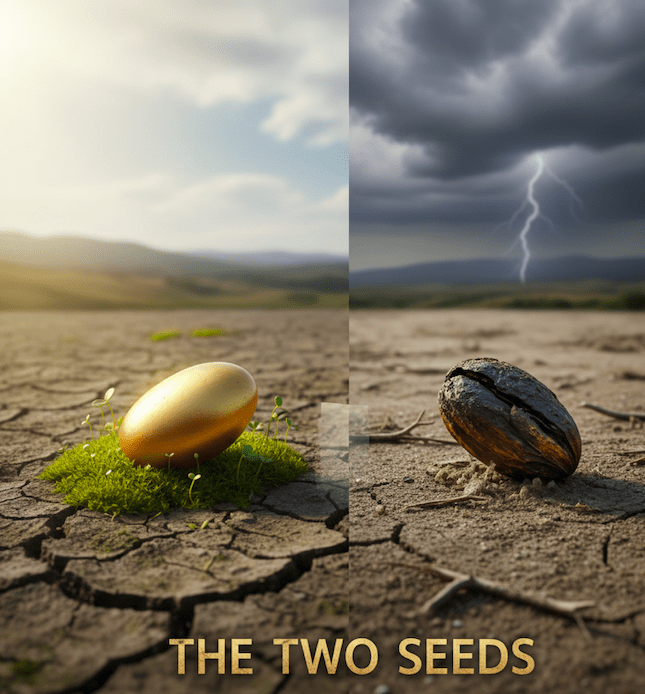
English story
Two seeds lay beside each other in soft earth. Rain had filled the ground, and spring was beginning.
The first seed listened to every sound above it.
“What if something eats my leaves?” it asked. “What if the wind breaks my stem?”
The second seed was nervous too. It did not know what the world above the soil looked like.
“But staying here has risks as well,” it said. “We were made to grow.”
The first seed decided to wait for a day without any danger.
The second began with a small root. It pushed down slowly and found water.
Some soil was hard. The root changed direction and moved around it. The seed did not need to force a straight path through every stone.
Next, it sent a little shoot upwards. The work took time. For many days, no one above the ground could see it.
Then a green tip appeared in the light.
The first seed heard about the sun. “Perhaps I will start tomorrow,” it said.
But tomorrow brought wind. The next day brought rain. There was always something to worry about.
Above, the small plant bent in bad weather. It lost a leaf once. With water and time, another grew.
A gardener placed a small support beside it. Growing did not mean doing everything without help.
At last, the plant opened its first flower.
Below the soil, the waiting seed had missed the season. It had spent so long trying to avoid every possible problem that it never began.
The flower turned towards the morning light. Its life was not free from danger. It was full of chances to learn and grow.
The lesson: Start with a small, safe step. You do not need perfect conditions to begin.
Think about it: This story does not mean you should ignore real danger. What is one safe goal you keep delaying? Who could help you begin when you feel unsure?
Earlier short Hindi version
हिंदी: दो बीज
दो बीज उपजाऊ मिट्टी में पास-पास पड़े थे। पहले बीज ने सोचा, "अगर मैंने अपनी जड़ें नीचे भेजीं, तो मुझे नहीं पता कि मेरा क्या सामना होगा।
अगर मैंने अपनी शाखा ऊपर भेजी, तो जानवर मुझे खा सकते हैं। जैसा हूँ वैसा रहना सुरक्षित है।" वह एक बीज ही बना रहा और अंततः सड़ गया। दूसरे बीज ने सोचा,
"मुझे नहीं पता कि बाहर क्या है, लेकिन मुझे बढ़ने की कोशिश करनी ही होगी। यह मेरी प्रकृति है।" उसने जड़ें नीचे धकेलीं, पानी और पोषक तत्व पाए।
उसने एक शाखा ऊपर धकेली, सूरज की रोशनी पाई। वह एक मजबूत पौधा बन गया, फूल और अधिक बीज देने लगा। हवा ने उसके नए बीजों को दूर-दूर तक ले जाया।
शिक्षा: विकास के लिए अज्ञात का सामना करने का साहस चाहिए। अपने आराम क्षेत्र में रहने से ठहराव आता है, जबकि अपनी
क्षमता को अपनाने से एक समृद्ध जीवन मिलता है।
Earlier short German version
Deutsch: Die zwei Samen
Zwei Samen lagen Seite an Seite in fruchtbarer Erde. Der erste Same dachte:
"Wenn ich meine Wurzeln nach unten schicke, weiß ich nicht, was mir begegnen wird. Wenn ich meinen
Spross nach oben schicke, könnten Tiere mich fressen.
Es ist sicherer, so zu bleiben, wie ich bin." Er blieb ein Same und verrottete schließlich.
Der zweite Same dachte: "Ich weiß nicht, was da draußen ist, aber ich muss versuchen zu wachsen.
Es ist meine Natur." Er drückte Wurzeln nach unten und fand Wasser und Nährstoffe. Er drückte einen Spross nach oben
und fand Sonnenlicht. Er wurde eine starke Pflanze, die Blüten und mehr Samen trug. Der Wind trug
seine neuen Samen weit und breit.
Moral: Wachstum erfordert Mut, sich dem Unbekannten zu stellen. In der Komfortzone zu bleiben
führt zur Stagnation, während das Ausschöpfen des eigenen Potenzials zu einem erfüllten Leben führt.
6. The King and the Spider
English story
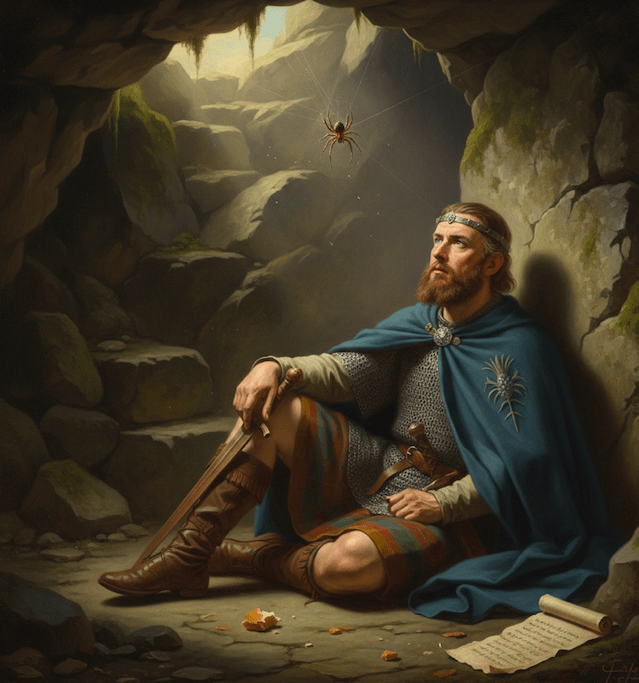
A king sat alone in a cave after losing a battle. Rain fell outside, and his clothes were wet.
He had tried hard, but his plans had failed. He wondered whether trying again would only bring more pain.
Near the entrance, a spider began to make a web. A thin thread needed to reach from one rock to another.
The spider moved forward. The thread fell short.
It climbed back and tried again. Another drop of rain shook the thread loose.
The king watched without moving.
“Even you cannot finish your work,” he said quietly.
The spider rested for a moment. Then it found a different place to begin.
Again it moved across the gap. Again it fell short.
The king began to notice more than the failures. The spider changed its starting point. It waited when the wind was strong. It did not simply make the same move without looking.
At last, a thread caught on the far rock.
The spider tested it. Then it crossed and began another part of the web.
The king sat up. He had been asking only whether to try again. Perhaps he also needed to ask what to change.
When the rain stopped, he left the cave. He found people he trusted and listened to their advice. They spoke about the mistakes in his old plan.
He did not promise that the next attempt would be easy. But he could prepare more carefully and ask for help.
This well-known tale is often told about Robert the Bruce. It is presented here as a legend, not as a checked account of an event.
Its small lesson can belong to anyone facing a hard task: rest, learn and choose the next step with care.
The lesson: Trying again helps most when we also learn from what happened.
Think about it: What changed during the spider’s attempts? When a task goes wrong, how can you decide whether to practise, change your plan or ask someone for help?
Earlier short Hindi version
हिंदी: राजा और मकड़ी (रॉबर्ट द ब्रूस)
एक पराजित राजा, एक गुफा में छिपा हुआ, ने एक मकड़ी को अपना जाल बुनने की कोशिश करते देखा।
उसने एक चट्टान के कगार से दूसरे तक झूलने की कोशिश की, लेकिन असफल रहा और गिर गया। उसने फिर कोशिश की। और फिर।
छह बार उसने कोशिश की और गिरा। राजा, मकड़ी की विफलता से स्वयं की पहचान करते हुए, सोचा, "तुम भी हार जानते हो।"
लेकिन मकड़ी ने सातवीं बार कोशिश की। वह सफल रही। जाल बुना गया। राजा प्रेरित हुआ। "अगर एक छोटी सी मकड़ी
छह असफलताओं के बाद दृढ़ रह सकती है, तो मैं भी कर सकता हूँ!" उसने अपने लोगों को फिर से संगठित किया, फिर से लड़ाई लड़ी,
और अपना राज्य वापस पा लिया।
शिक्षा: सच्ची शक्ति कभी न गिरने में नहीं, बल्कि हर बार गिरकर उठने में है। दृढ़ता अंतिम सफलता की कुंजी है।
Earlier short German version
Deutsch: Der König und die Spinne (Robert the Bruce)
Ein besiegter König, der sich in einer Höhle versteckte, sah eine Spinne, die versuchte, ihr Netz zu weben.
Sie versuchte, von einem Felsvorsprung zum anderen zu schwingen, scheiterte aber und fiel.
Sie versuchte es erneut. Und wieder. Sechsmal versuchte sie es und fiel. Der König,
der sich mit dem Versagen der Spinne identifizierte, dachte: "Du kennst auch Niederlagen."
Aber die Spinne versuchte es ein siebtes Mal. Sie hatte Erfolg. Das Netz war gewebt. Der König war inspiriert.
"Wenn eine winzige Spinne nach sechs Misserfolgen durchhalten kann, kann ich das auch!" Er sammelte seine Männer,
kämpfte erneut und gewann sein Königreich zurück.
Moral: Wahre Stärke liegt nicht darin, niemals zu fallen, sondern jedes Mal wieder aufzustehen.
Ausdauer ist der Schlüssel zum endgültigen Erfolg.
7. The Sack of Faults
English story
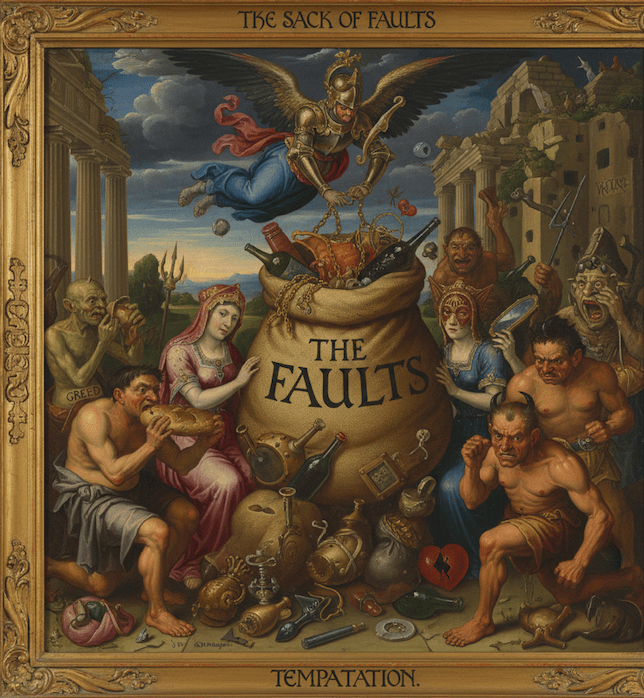
A village teacher brought an empty sack and several stones to a meeting.
“I would like to try an exercise,” she said. “Think about the small things that annoy you in other people.”
People began talking at once. One neighbour was late. Another interrupted. Someone never returned a borrowed tool.
The teacher wrote a short word for each complaint and put a stone in the sack.
Soon it was heavy.
A man lifted it and laughed. “There are many difficult people here.”
“Now let us ask another question,” said the teacher. “Have we ever done any of these things ourselves?”
The room became quieter.
The man who complained about waiting remembered arriving late the day before. The woman upset about interruptions remembered speaking over her daughter.
One by one, people took a stone and thought about it.
They did not discover that every complaint was wrong. Some problems still needed a clear conversation. But blaming another person had been easier than looking at their own actions.
The teacher asked each person to choose one small habit to change.
“I will return the ladder tonight,” said one.
“I will let people finish speaking,” said another.
The man with the sack promised to leave home earlier when he had a meeting.
A week later, they met again. No one was perfect. The woman had interrupted once and then apologised. The man had arrived on time twice.
Those small changes mattered more than another long list of complaints.
The teacher left the empty sack by the door.
“Before filling it again,” she said, “ask what part of the problem you can help change.”
The villagers still needed to speak about unfair behaviour. They simply learned to include themselves in the work of making things better.
The lesson: Look at your own actions before judging everyone else.
Think about it: A fair complaint can still matter. How can you talk about a problem kindly and clearly? What small habit could you work on this week?
Earlier short Hindi version
हिंदी: दोषों की बोरी
एक बुद्धिमान व्यक्ति ने हर ग्रामीण को एक बोरी दी और कहा, "इसे अपने दरवाजे पर लटकाओ।
जब भी तुम किसी और में कोई दोष देखो, उसे एक पत्थर पर लिखो और अपनी बोरी में डाल दो।"
लोग उत्सुकता से दूसरों का न्याय करने लगे, और उनकी बोरियाँ भारी हो गईं। एक हफ्ते बाद, बुद्धिमान ने कहा,
"अब, तुमने जो भी दोष लिखा है, अगर वही दोष तुममें है, तो वह पत्थर निकाल दो।" अंत तक, ज़्यादातर बोरियाँ अभी भी भारी थीं।
उन्होंने निष्कर्ष निकाला, "हम दूसरों में दोष जल्दी देख लेते हैं लेकिन उन्हें खुद में पहचानने में धीमे हैं।
जो वजन तुम ढो रहे हो वह ज्यादातर तुम्हारा अपना है।"
शिक्षा: दूसरों को कठोरता से आंकने से पहले, अपने भीतर देखो। जो दोष हम दूसरों में देखते हैं
वे अक्सर हमारी अपनी खामियों का प्रतिबिंब होते हैं।
Earlier short German version
Deutsch: Der Sack mit den Fehlern
Ein Weiser gab jedem Dorfbewohner einen Sack und sagte: "Hängt diesen an eure Tür.
Immer wenn ihr einen Fehler bei jemand anderem bemerkt, schreibt ihn auf einen Stein und legt ihn in euren Sack."
Die Leute begannen eifrig, andere zu beurteilen, und ihre Säcke wurden schwer. Nach einer Woche sagte der Weise:
"Nun, für jeden Fehler, den ihr aufgeschrieben habt, wenn ihr denselben Fehler besitzt, entfernt diesen Stein."
Am Ende waren die meisten Säcke immer noch schwer. Er schloss: "Wir sind schnell darin,
Fehler bei anderen zu sehen, aber langsam, sie bei uns selbst zu erkennen. Das Gewicht, das ihr tragt, ist
größtenteils euer eigenes."
Moral: Bevor du andere hart beurteilst, schau in dich selbst. Die Fehler, die wir bei anderen sehen,
sind oft Spiegelungen unserer eigenen Unvollkommenheiten.
8. The Talking Cave

English story
A jackal lived in a cave beside a forest path. Each evening, he returned after searching for food.
One day, a lion found the empty cave. He stepped inside and waited. He hoped an animal would come home before dark.
When the jackal returned, he noticed large footprints near the entrance.
He looked carefully. The prints went into the cave. He could not find any coming out.
The jackal stopped before entering.
Something might be inside. He could not see through the dark opening, and he did not want to learn by getting too close.
He stood at a safe distance and made a plan.
“Good evening, Cave!” he called. “You usually answer when I come home. Why are you quiet today?”
Inside, the lion listened.
“Perhaps this cave really speaks,” he thought. “If it stays silent, the jackal may leave.”
The lion made his voice deep and loud.
“Come in, my friend!”
The jackal’s ears lifted. He had his answer. Caves did not invite him home, but a waiting lion could.
He turned and went away without arguing with the voice.
The lion waited and waited. At last, he understood that his own answer had given him away.
That night, the jackal slept somewhere else. The next morning, he checked the area again from a safe place. He did not enter until the danger had passed.
When he told his friends, he did not call it a magic cave. He explained the footprints and the voice.
The useful part of the story was not a strange rumour. It was the way he noticed signs and thought before acting.
This retelling uses the talking-cave trick to make the lesson clearer. It is a make-believe animal tale, not advice for meeting a real lion.
The lesson: Notice what is around you. Check a worry safely instead of rushing ahead.
Think about it: Which two signs made the jackal stop? If a place seems unsafe in real life, why is it better to move away and ask for help than to investigate alone?
Earlier short Hindi version
हिंदी: बोलने वाली गुफा
एक शेर, एक खरगोश का पीछा करते हुए, एक गुफा से आवाज़ सुनता है: "अंदर आओ! मैं सौभाग्य की गुफा हूँ!"
शेर, जिज्ञासावश, अंदर गया लेकिन वह अंधेरी और खाली पाया। आवाज़ उसकी अपनी दहाड़ की प्रतिध्वनि थी! इस बीच,
एक सियार ने शेर को अंदर जाते देखा था। जब शेर बाहर नहीं आया, तो सियार ने सोचा कि गुफा ने उसे खा लिया है। सियार ने "मानव-भक्षी गुफा"
की कहानी फैला दी। जानवरों ने वर्षों तक इससे परहेज किया। आखिरकार, एक बहादुर लोमड़ी ने जाँच की। उसने प्रवेश द्वार पर दहाड़ लगाई,
"निमंत्रण" सुना, लेकिन देखा कि यह सिर्फ उसकी प्रतिध्वनि थी। वह अंदर गई और सुरक्षित बाहर आई, मिथक को उजागर कर दिया।
गुफा तो हमेशा से बस एक गुफा थी।
शिक्षा: डर अक्सर कहानियों और अज्ञानता पर आधारित होता है। सच्चाई की स्वयं जाँच करो;
अंधविश्वास या अफवाहों पर विश्वास मत करो।
Earlier short German version
Deutsch: Die sprechende Höhle
Ein Löwe, der einen Hasen verfolgte, hörte eine Stimme aus einer Höhle:
"Tritt ein! Ich bin die Höhle des Glücks!" Der Löwe, neugierig, trat ein, fand sie aber dunkel und leer.
Die Stimme war ein Echo seines eigenen Gebrülls! Unterdessen hatte ein Schakal den Löwen eintreten sehen.
Als der Löwe nicht herauskam, dachte der Schakal, die Höhle habe ihn gefressen.
Der Schakal verbreitete die Geschichte von der "menschenfressenden Höhle".
Tiere mieden sie jahrelang. Schließlich untersuchte ein mutiger Fuchs. Er brüllte am Eingang, hörte die
"Einladung", bemerkte aber, dass es nur sein Echo war. Er ging sicher hinein und wieder heraus und entlarvte den Mythos.
Die Höhle war die ganze Zeit nur eine Höhle.
Moral: Angst basiert oft auf Geschichten und Unwissenheit. Untersuche die Wahrheit selbst; glaube nicht an
Aberglauben oder Gerüchte.
9. The River and the Desert

English story
A river travelled from the mountains through green fields. It passed villages and turned water wheels.
“I can go anywhere,” it thought.
Then it reached a wide desert. Sand stretched far beyond the trees.
The river rushed forward, but its water sank into the ground. It tried again with more force. More water disappeared.
For the first time, it did not know how to continue.
A gentle wind moved across the sand.
“You cannot cross this place in the same way,” the wind said.
“I am a river,” it replied. “Moving forward is what I do.”
“That does not mean there is only one way.”
The wind spoke about warm air lifting water into the sky. It could be carried across the desert and fall again as rain.
The river was afraid. It knew the feel of stones and banks. It did not know what it would be like to become part of a cloud.
“What if I lose myself?” it asked.
“Change can feel strange,” said the wind. “It does not always mean everything important is gone.”
In this tale, the sun warmed the river’s water into the air. The wind carried it slowly above the sand.
Beyond the desert, clouds gathered over hills. Rain fell into small streams. The streams joined, and a river began to flow again.
Its path was new, but water still fed the trees and fields.
This is a make-believe story using an idea from the water cycle. It gives the river a voice so we can think about change.
The river had not crossed by pushing harder forever. It had stopped, listened and allowed a different kind of journey.
Now, when it met a rock, it looked for a way around it before calling the rock an enemy.
The lesson: A new way can help when the old way no longer works.
Think about it: What was the river afraid of losing? Think of a time you learned a different way to do something. What stayed the same, even when your method changed?
Earlier short Hindi version
हिंदी: नदी और रेगिस्तान
एक गर्वित नदी एक विशाल रेगिस्तान तक पहुँची। "मैं तुम्हें पार करूँगी!" उसने दहाड़ लगाई, आगे बढ़ते हुए।
लेकिन उसका पानी रेत में डूब गया और गायब हो गया। उसने बार-बार कोशिश की, और कमजोर होती गई। एक कोमल आवाज,
हवा, फुसफुसाई, "तुम एक नदी के रूप में पार नहीं कर सकती। तुम्हें अपना रूप छोड़कर वाष्प बनना होगा। मुझे तुम्हें ले चलने दो।" नदी ने विरोध किया,
"लेकिन मैं एक नदी हूँ! मैं बदल नहीं सकती।" आखिरकार, थककर, उसने आत्मसमर्पण कर दिया। सूरज ने उसे वाष्प में गर्म किया, हवा ने उसे रेगिस्तान के पार पहुँचाया,
और बादलों के रूप में, वह दूसरी ओर बरस गई, एक नई नदी बन गई। उसने सीखा कि कुछ बाधाओं पर काबू पाने के लिए,
तुम्हें रूपांतरित होने को तैयार रहना चाहिए।
शिक्षा: अपनी पहचान या तरीके से जिद्दीपन से चिपके रहने से असफलता हो सकती है।
लचीलापन और अनुकूलनशीलता अक्सर बड़ी चुनौतियों पर काबू पाने की कुंजी हैं।
Earlier short German version
Deutsch: Der Fluss und die Wüste
Ein stolzer Fluss erreichte eine weite Wüste. "Ich werde dich überqueren!", donnerte er und stürzte sich vorwärts.
Aber sein Wasser sank im Sand und verschwand. Er versuchte es wieder und wieder und wurde schwächer.
Eine sanfte Stimme, der Wind, flüsterte: "Du kannst nicht als Fluss hinüber. Du musst deine Form loslassen und Dampf werden.
Lass mich dich tragen." Der Fluss wehrte sich: "Aber ich bin ein Fluss! Ich kann mich nicht ändern." Schließlich,
erschöpft, ergab er sich. Die Sonne erwärmte ihn zu Dampf, der Wind trug ihn über die Wüste, und als Wolken regnete er
auf der anderen Seite herab und bildete einen neuen Fluss. Er lernte, dass man, um manche Hindernisse zu überwinden, bereit sein muss, sich zu verwandeln.
Moral: Starr an deiner Identität oder Methode festzuhalten, kann zum Scheitern führen.
Flexibilität und Anpassungsfähigkeit sind oft der Schlüssel, um große Herausforderungen zu meistern.
10. The Mirror of Truth

English story
A king wanted to know whom he could trust. Many people in his palace wore fine clothes and spoke pleasant words.
One day, a wise visitor brought him a mirror.
“This mirror does not show your face,” she said. “In this story, it shows the habits you carry inside.”
The king invited his court to look.
The queen saw a peacock spreading bright feathers. She remembered how often she worried about being admired.
A minister saw a bird guarding a pile of food. He thought of the money he kept asking others to give him.
A general saw an animal ready to strike. He remembered speaking cruelly when people made small mistakes.
Each stepped back in surprise.
Then a gardener looked into the glass. He saw a flower growing above muddy water. He did not understand why.
The visitor asked about his morning.
“I watered the new plants,” he said. “I helped a young worker lift a heavy pot. Then I gave my lunch to someone who had forgotten theirs.”
The king listened. None of those acts had been done to win a palace prize.
At last, the king looked too. The story does not need to tell us his image. What mattered was that he did not ask the mirror to judge only other people.
The visitor explained that a habit was not a life sentence. People could learn to act differently.
The queen listened more. The minister began returning what he owed. The general practised speaking calmly.
Not every change was easy or quick. The mirror did not do the work for them.
It only helped them see where to start.
The king kept it in a quiet room, away from public praise. He wanted a reminder to look inward before choosing whom to blame.
The lesson: Kindness and honesty matter more than a grand appearance.
Think about it: The mirror showed actions, not a person’s worth forever. What is one kind habit you could practise? How can noticing a mistake help you make a better choice next time?
Earlier short Hindi version
हिंदी: सच्चाई का आईना
एक परेशान राज्य में, एक ऋषि ने राजा को एक जादुई आईना दिया।
"यह सच्चाई का आईना जो भी इसमें देखेगा उसकी वास्तविक प्रकृति दिखाता है," उन्होंने कहा। घमंडी रानी ने देखा और
एक मोर देखा—घमंडी और अकड़ू। लालची मंत्री ने एक गिद्ध देखा—मुर्दाखोर और स्वार्थी। क्रूर सेनापति ने एक बिच्छू देखा—ज़हरीला
और हमलावर। हर कोई भयभीत था। आखिरकार, दयालु माली ने देखा और एक कमल देखा—शुद्ध और सुंदर, कीचड़ से उठता हुआ।
राजा समझ गया। आईना शारीरिक रूप नहीं, बल्कि किसी के चरित्र का सार दिखाता था। उसने तब से शासन किया, बाहरी रूप
से अधिक आंतरिक सौंदर्य को महत्व देते हुए।
शिक्षा: आपका सच्चा स्वरूप आपके चरित्र से परिभाषित होता है, न कि आपकी सुंदरता या स्थिति से।
दयालुता, ईमानदारी और पवित्रता जैसे गुणों को पोषित करें।
Earlier short German version
Deutsch: Der Spiegel der Wahrheit
In einem unruhigen Königreich gab ein Weiser dem König einen magischen Spiegel.
"Dieser Spiegel der Wahrheit zeigt das wahre Wesen dessen, der hineinschaut", sagte er. Die eitle
Königin schaute hinein und sah einen Pfau – eitel und stolzierend. Der gierige Minister sah einen
Geier – aasfressend und selbstsüchtig. Der grausame General sah einen Skorpion – giftig und angreifend.
Jeder war entsetzt. Schließlich schaute der gutherzige Gärtner hinein und sah eine Lotusblume – rein und schön,
aus dem Schlamm aufsteigend. Der König verstand. Der Spiegel zeigte nicht die physische Form, sondern das Wesen des
Charakters. Er regierte von da an und schätzte innere Schönheit über äußeres Aussehen.
Moral: Dein wahres Selbst wird durch deinen Charakter definiert, nicht durch dein Aussehen oder deinen Status.
Pflege Tugenden wie Freundlichkeit, Ehrlichkeit und Reinheit.
These stories offer rich narratives and profound lessons about self-awareness, courage, gratitude, and transformation. Enjoy sharing them!


Comments (0)
No comments yet. Be the first to comment!