
Other Topic
10 Moral Stories in Easy English – Part 2
Choose a story and take a quiet reading break. These simple retellings add scenes and dialogue to familiar tales. Some English endings are gentler for children.
Each English story, lesson and reader question takes about three minutes at a slow pace of about 120 words a minute. Your reading time may be different.
The earlier short Hindi and German versions are kept below each story, where available. They may use different details or endings. Open the language section you want to read.
Choose a story
- The Magical Paintbrush
- The Elephant and the Rope
- The Two Wolves
- The Starfish Helper
- The Cracked Pot
- The Farmer and the Snake
- King Midas and the Golden Touch
- The Fox and the Goat
- The Greedy Dog
- The Oak and the Reed
1. The Magical Paintbrush

English story
Arjun drew pictures in the dust with a stick. He loved making birds, trees and houses, but he had no paintbrush.
One evening, an old woman stopped beside his drawing. “Why have you drawn a bowl?” she asked.
“My neighbour is hungry,” Arjun said. “I wish I could give her a full one.”
The woman gave him a brush. “What you paint will become real. Use it with care.”
Arjun thought it was a kind joke. Still, he painted a small bowl of rice on an old board.
A real bowl appeared. Warm steam rose from it.
The next morning, he brought food to his neighbour. He painted a tool for a farmer and a warm blanket for a child.
Before painting, he always asked what was needed. He did not fill the streets with things no one could use.
Soon the ruler heard about the brush. He ordered Arjun to the palace.
“Paint a mountain of gold,” he said.
Arjun looked at the gold already covering the walls. “People outside need food and clean water.”
“I asked for gold.”
The ruler locked Arjun in a room. That night, the boy looked at the brush and remembered its first gift: a bowl for a hungry neighbour.
The next day, he painted a wide sea with a golden mountain far away. Then he painted a boat.
The ruler rushed into it before anyone could question the plan. He wanted to be first to reach the gold.
In this magical tale, Arjun painted a storm. The ruler’s boat was driven far from shore. His guards were busy, and Arjun found a way out.
The boy returned home. He still had the brush, but he did not paint himself a palace. He helped repair a leaking roof first.
When someone asked why, he pointed to the dry room beneath it.
“That is a good use for a gift,” he said.
The lesson: A useful skill can make life better for other people.
Think about it: Arjun asked what people needed before helping. Why did that matter? What skill could you practise and share, even without a magical brush?
Earlier short Hindi version
हिंदी: जादुई पेंटब्रश
एक छोटे से गाँव में, अर्जुन नाम का एक गरीब पर दयालु लड़का रहता था।
उसे पेंटिंग का बहुत शौक था लेकिन उसके पास पेंटब्रश खरीदने के पैसे नहीं थे। एक रात, एक बूढ़ी औरत ने उसे एक जादुई पेंटब्रश दिया।
"इस ब्रश से तुम जो भी पेंट करोगे, वह असली बन जाएगा," उसने कहा। "लेकिन इसका इस्तेमाल सिर्फ दूसरों की मदद के लिए करना।"
अर्जुन ने भूखों के लिए भोजन, गरीबों के लिए कपड़े और किसानों के लिए औजार बनाए।
लालची राजा को इस जादू के बारे में पता चला और उसने अर्जुन को बंदी बना लिया। "मेरे लिए सोने का पहाड़ बनाओ!" उसने डाँटा।
अर्जुन को बूढ़ी औरत की बात याद आई। उसने एक समुद्र और एक छोटी नाव बनाई। "पहले हमें सोने के पहाड़ तक पहुँचने के लिए इस समुद्र को पार करना होगा,"
उसने कहा। अधीर राजा नाव में कूद गया। तब अर्जुन ने एक भयंकर तूफान बनाया। लहरों ने नाव पलट दी, और राजा बह गया। अर्जुन अपने गाँव लौट आया और
सभी के भले के लिए ब्रश का इस्तेमाल जारी रखा।
शिक्षा: असली शक्ति अपनी प्रतिभा का उपयोग लालच के लिए नहीं, बल्कि दूसरों की सहायता के लिए करने में है।
Earlier short German version
Deutsch: Der Zauberpinsel
In einem kleinen Dorf lebte ein armer, aber gutherziger Junge namens Arjun. Er liebte es zu malen,
konnte sich aber keinen Pinsel leisten. Eines Nachts gab ihm eine alte Frau einen magischen Pinsel.
"Was immer du mit diesem Pinsel malst, wird Wirklichkeit werden", sagte sie. "Aber benutze ihn nur, um anderen zu helfen."
Arjun malte Essen für die Hungrigen, Kleider für die Armen und Werkzeuge für die Bauern.
Der habgierige Kaiser hörte von dieser Magie und ließ Arjun gefangen nehmen. "Male mir einen Berg aus Gold!", forderte er.
Arjun erinnerte sich an die weisen Worte und malte ein Meer mit einem kleinen Boot. "Zuerst müssen wir dieses Meer überqueren,
um zum Goldberg zu gelangen", sagte er. Der ungeduldige Kaiser sprang ins Boot. Da malte Arjun einen gewaltigen Sturm.
Die Wellen kenterten das Boot und der Kaiser wurde fortgespült. Arjun kehrte in sein Dorf zurück und benutzte den
Pinsel weiterhin zum Wohle aller.
Moral: Wahre Macht liegt darin, seine Gaben zu nutzen, um anderen zu helfen, nicht aus Gier.
2. The Elephant and the Rope
English story
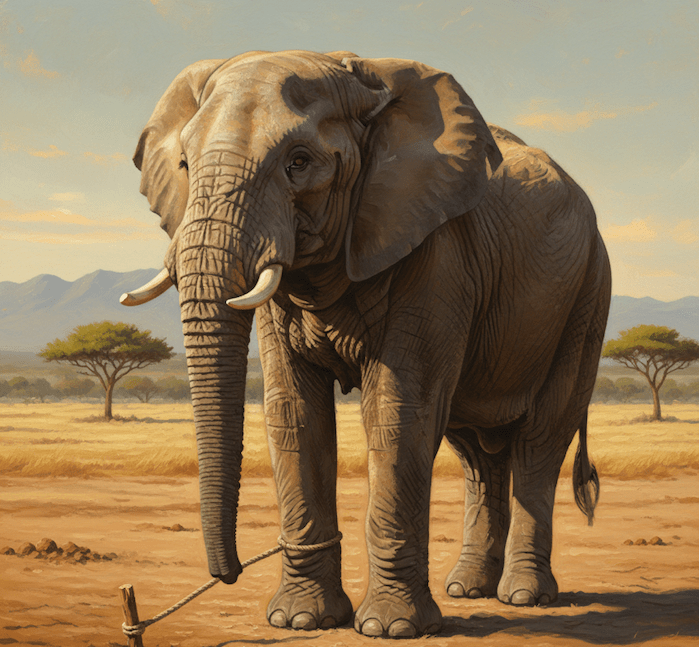
A traveller stopped near a farm. Beside a shed stood a large elephant. A thin rope joined its leg to a small post.
The traveller looked twice. The elephant was much stronger than the rope.
“Why does it stay?” he asked the keeper.
“When it was young, it could not pull free,” the keeper replied. “It tried many times. Later, it stopped trying.”
The traveller watched the animal lift a heavy branch with ease. It was no longer the small elephant it remembered being.
That afternoon, a child came to the farm with a broken toy cart. She wanted to mend it, but she put it down as soon as she saw the tools.
“I cannot do it,” she said. “I tried last year.”
The traveller thought about the elephant.
“What part was hard last year?” he asked.
“The wheel would not stay on.”
“Have you learned anything since then?”
The child looked at her hands. She had learned to tie stronger knots. She had watched her aunt repair a chair. She was bigger too.
“Perhaps a little,” she said.
They asked the keeper for help. He showed her a safe way to hold the cart. The child fixed one part, then another.
The first try was not perfect. The wheel leaned. She looked again and changed its place.
Soon the cart moved across the ground.
“I could not do it before,” she said. “That does not mean I can never do it.”
The keeper listened. He also thought about the elephant’s care. An animal’s needs mattered more than an easy story about a rope.
He went to check its space and speak with someone who knew how to care for elephants well.
The traveller continued on his way. He remembered that old failures can teach us, but they do not always describe what we can do now.
The lesson: With learning, support and practice, an old difficulty may change.
Think about it: This is a teaching story, not a guide to animal care. What safe task would you like to try again? Who could help you take the first step?
Earlier short Hindi version
हिंदी: हाथी और रस्सी
एक आदमी ने एक विशाल हाथी को एक पतली रस्सी से एक छोटे से लकड़ी के खूँटे से बँधा देखा।
हाथी आसानी से छूट सकता था, लेकिन उसने कोशिश तक नहीं की। उत्सुक होकर, उस आदमी ने माली से पूछा, "यह क्यों नहीं भागता?"
माली ने समझाया, "जब यह हाथी छोटा था, तो हमने इसे इसी मजबूत श्रृंखला से बाँधा था।
इसने कई दिनों तक छूटने की कोशिश की लेकिन असफल रहा।
इसने सीख लिया कि कोशिश करना बेकार है। अब, भले ही यह मजबूत है और रस्सी कमजोर, यह मानता है कि यह नहीं तोड़ सकता। यह अपनी जवानी की सीमा याद रखता है।"
वह आदमी हैरान रह गया। हाथी रस्सी से नहीं, बल्कि अपने ही मन से बंधा हुआ था।
शिक्षा: अपने अतीत की असफलताओं को अपने भविष्य की सीमा मत बनने दो। अपनी ताकत पर विश्वास रखो।
Earlier short German version
Deutsch: Der Elefant und das Seil
Ein Mann sah einen riesigen Elefanten, der mit einem dünnen Seil an einen kleinen Holzpfosten gebunden war.
Der Elefant hätte sich leicht befreien können, aber er versuchte es nicht einmal.
Neugierig fragte der Mann den Trainer: "Warum bricht er nicht aus?"
Der Trainer erklärte: "Als dieser Elefant ein Baby war, banden wir ihn mit derselben starken Kette fest.
Er versuchte tagelang, sich zu befreien, aber es gelang ihm nicht. Er lernte, dass der Versuch nutzlos war.
Jetzt, obwohl er stark ist und das Seil schwach, glaubt er, dass er es nicht zerreißen kann.
Er erinnert sich an die Begrenzung aus seiner Jugend."
Der Mann war erstaunt. Der Elefant wurde nicht vom Seil festgehalten, sondern von seinem eigenen Geist.
Moral: Lass die Niederlagen der Vergangenheit nie deine Zukunft begrenzen. Glaube an deine Stärke.
3. The Two Wolves

English story
A boy came home angry. His friend had laughed when he gave a wrong answer in class.
“I will laugh at him tomorrow,” the boy told his grandfather. “Then he will know how it feels.”
His grandfather moved a chair into the shade. “Sit with me first.”
The boy did not want to sit. He wanted to plan a sharp answer. But he stayed.
“Sometimes,” the grandfather said, “my feelings are like two wolves.”
The boy looked up.
“One wants to bite back. It tells me to hurt someone because I am hurt. The other asks me to stop and choose what helps.”
“Which one wins?”
“The one I keep feeding with my actions.”
The boy picked at a leaf. “So I must never be angry?”
“No. Anger is a feeling. It can tell us something is wrong. What matters is what we do next.”
They sat quietly for a moment. The boy could hear a bird above them.
“What could I do instead?” he asked.
“You could tell your friend that his words hurt. You could ask a teacher for help. You could take time before speaking.”
The next day, the boy still felt nervous. At break, he stood beside his friend.
“I did not like being laughed at,” he said. “Please do not do that again.”
His friend looked surprised. Then he said sorry. He had not understood how much the joke hurt.
Later, the friend answered a question badly. The boy felt a quick wish to laugh. He noticed it, took a breath and stayed quiet.
That evening, he told his grandfather.
“Was that feeding the second wolf?”
“Yes. You made one useful choice.”
The boy knew he would feel angry again. Now he also knew he did not have to let that feeling choose every action.
The lesson: Feelings are real, but we can learn safer ways to act on them.
Think about it: What helped the boy speak clearly without being cruel? Name one calm action you could try when you feel hurt or angry.
Earlier short Hindi version
हिंदी: दो भेड़िये
एक बुद्धिमान दादाजी ने अपने पोते को एक दोस्त से लड़ने के बाद गुस्से में देखा।
उन्होंने लड़के को बैठाया और कहा, "मेरे अंदर, हम सबके अंदर, एक लड़ाई चल रही है। यह दो भेड़ियों के बीच है।"
"पहला भेड़िया है: गुस्सा, ईर्ष्या, दुख, पछतावा, लालच, अहंकार, आत्म-दया, अपराधबोध, रोष, हीनता, झूठ, झूठा घमंड, और अहंकार।"
"दूसरा भेड़िया है: खुशी, शांति, प्यार, आशा, निस्तब्धता, विनम्रता, दयालुता, परोपकार, सहानुभूति, उदारता, सच्चाई, करुणा, और विश्वास।"
पोते ने एक पल सोचा और पूछा, "दादाजी, कौन सा भेड़िया जीतता है?"
बूढ़े आदमी ने मुस्कुराकर जवाब दिया, "जिसे तुम खिलाते हो।"
शिक्षा: आपका चरित्र उन विचारों और कार्यों से परिभाषित होता है जिन्हें आप पोषित करना चुनते हैं।
Earlier short German version
Deutsch: Die zwei Wölfe
Ein weiser Großvater sah seinen Enkel wütend nach einem Streit mit einem Freund.
Er setzte den Jungen hin und sagte: "In mir tobt ein Kampf, in uns allen.
Es ist ein Kampf zwischen zwei Wölfen."
"Der erste Wolf ist: Wut, Neid, Trauer, Reue, Gier, Arroganz, Selbstmitleid, Schuld,
Groll, Minderwertigkeit, Lügen, falscher Stolz und Ego."
"Der zweite Wolf ist: Freude, Frieden, Liebe, Hoffnung, Gelassenheit, Demut,
Freundlichkeit, Wohlwollen, Einfühlungsvermögen, Großzügigkeit, Wahrheit, Mitgefühl und Glaube."
Der Enkel dachte einen Moment nach und fragte: "Welcher Wolf gewinnt, Großvater?"
Der alte Mann lächelte und antwortete: "Der, den du fütterst."
Moral: Dein Charakter wird durch die Gedanken und Taten definiert, die du wählst zu nähren.
4. The Starfish Helper

English story
After a storm, an older man walked along a beach. The sand was covered with seaweed, broken shells and starfish.
Further along, a girl was moving slowly near the water. She bent down, stood up and moved again.
The man wondered what she was doing.
When he came closer, he saw her helping starfish reach the sea. In this familiar teaching story, the sun was rising and many animals were left on the sand.
“There are so many,” the man said. “You cannot help them all.”
The girl looked along the beach. It was true. The shore seemed to go on forever.
She did not pretend that she could finish the whole job alone. She bent towards another starfish.
“I can help this one,” she said.
The man watched the water move over the place where it had been.
For several minutes, he had been thinking only about the size of the problem. Because he could not solve everything, he had done nothing.
He took off his bag and asked, “What can I do?”
The girl pointed to a nearby patch of sand. Together, they worked on a small area.
Soon another walker stopped. Then a family asked how to help. They took breaks and looked after one another in the growing heat.
The beach was not completely clear when they left. There was still work beyond what they could do.
But the place where they had started looked different.
The man walked home more slowly. He thought about a neighbour he had meant to visit and a small job he kept putting off.
That afternoon, he knocked on the neighbour’s door.
“I cannot fix every hard thing,” he said. “But I can bring your shopping in.”
It was a small offer. It was also useful.
The lesson: A small kind act still matters, even when the whole problem is large.
Think about it: This is a story about kindness, not instructions for handling sea animals. Follow local wildlife advice in real life. What small, safe help could you offer someone nearby?
Earlier short Hindi version
हिंदी: तारामीन फेंकने वाला
एक सुबह, एक बूढ़ा आदमी तूफान के बाद समुद्र तट पर टहल रहा था।
हज़ारों तारामीन (स्टारफ़िश) किनारे पर आ गई थीं और धूप में मर रही थीं। दूर से, उसने एक छोटी लड़की देखी।
वह एक-एक करके तारामीन उठा रही थी और उन्हें वापस समुद्र में फेंक रही थी।
बूढ़े आदमी ने उसके पास जाकर कहा, "बेटी, यहाँ मीलों तक समुद्र तट है और हज़ारों तारामीन हैं। तुम क्या फर्क ला सकती हो?"
लड़की ने विनम्रता से सुना। फिर वह झुकी, एक और तारामीन उठाई, और उसे समुद्र में फेंक दिया। वह मुस्कुराई और बोली, "मैंने उस एक के लिए फर्क ला दिया।"
प्रेरित होकर, बूढ़ा आदमी भी उसके साथ जुड़ गया। जल्द ही, अन्य लोगों ने उन्हें देखा और मदद की। शाम तक, उन्होंने अनगिनत तारामीन बचा ली थीं।
शिक्षा: कोई भी दया का कार्य छोटा नहीं होता। हर एक प्रयास मायने रखता है और दूसरों को प्रेरित कर सकता है।
Earlier short German version
Deutsch: Der Seesternwerfer
Eines Morgens spazierte ein alter Mann nach einem großen Sturm am Strand.
Tausende Seesterne waren an Land gespült worden und starben in der Sonne.
In der Ferne sah er ein junges Mädchen. Es hob einen Seestern nach dem anderen auf und warf ihn zurück ins Meer.
Der alte Mann näherte sich ihr und sagte: "Kleines Mädchen, der Strand erstreckt sich über Meilen und es gibt Tausende von Seesternen.
Welchen Unterschied kannst du denn schon machen?"
Das Mädchen hörte höflich zu. Dann bückte es sich, hob einen weiteren Seestern auf und warf ihn ins Meer.
Es lächelte und sagte: "Für diesen einen habe ich einen Unterschied gemacht."
Inspiriert schloss sich der alte Mann ihr an. Bald sahen sie andere und halfen auch.
Am Abend hatten sie unzählige Seesterne gerettet.
Moral: Keine Freundlichkeit ist zu klein. Jede einzelne Anstrengung zählt und kann andere inspirieren.
5. The Cracked Pot
English story
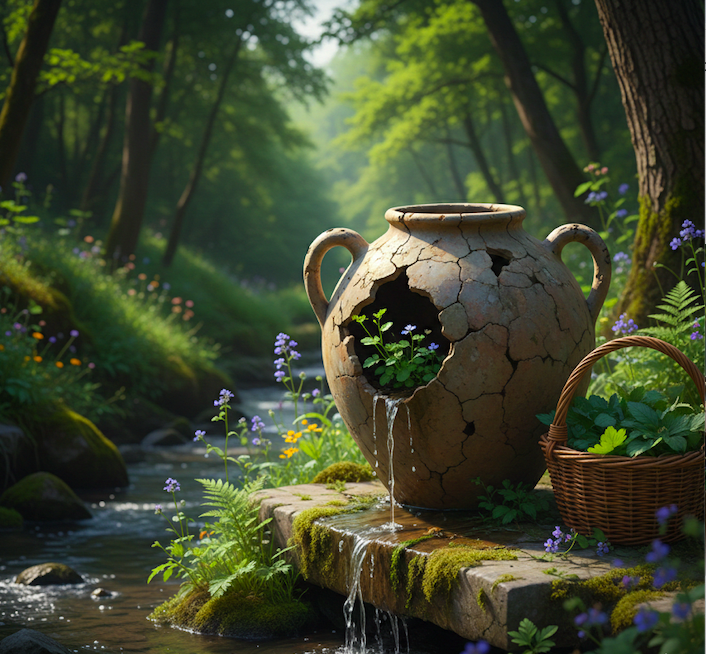
Every morning, a woman carried two water pots from the river. One hung on each end of a wooden pole.
The first pot held all its water. The second had a thin crack. By the time they reached home, it was only half full.
The cracked pot watched drops fall on the path. Each drop made it feel worse.
“You work so hard,” it told the woman one day. “And I waste your water.”
The woman put down the pole. “Why do you think your work is wasted?”
“The other pot arrives full. I never do.”
She did not answer at once. Instead, she asked the pot to look carefully on their next walk.
The following morning, sunlight reached the edge of the path. Small yellow flowers grew there. Bees moved between them.
“Did you notice which side they grow on?” the woman asked.
The pot looked across. The other side was dry. The flowers grew along its own side.
“I planted seeds there,” she explained. “I knew you lost some water. Each day, you watered them.”
The pot was quiet.
“These flowers go to my neighbours,” the woman continued. “Some grow beside our doorway. They bring colour to a long walk.”
The pot looked at a drop falling from its crack. It landed near a small green leaf.
It still wished it could carry more water. The woman did not tell it to stop feeling that way. She checked the crack and made sure the pot was safe to use.
But now it could see more than one part of its story.
On the next walk, it watched the flowers instead of counting every lost drop. It had not become the same as the other pot. It had found a different way to be useful.
The lesson: A difficulty does not tell the whole story about someone’s value.
Think about it: The woman noticed a useful part the pot could not see. How can you help a friend see a strength they may have forgotten?
Earlier short Hindi version
हिंदी: दरार वाला घड़ा
एक पानी ढोने वाले के पास दो घड़े थे। एक बिल्कुल सही था, लेकिन दूसरे में एक दरार थी और पानी टपकता था।
नदी से लंबी दूरी तय करने के बाद, दरार वाला घड़ा हमेशा आधा ही भरा रह जाता था। उसे अपने इस अपूर्ण होने पर शर्मिंदगी महसूस होती थी।
आखिरकार, उसने पानी ढोने वाले से कहा: "मुझे इस दरार की वजह से खुद पर शर्म आती है। मैं आपकी मेहनत बर्बाद करता हूँ।"
पानी ढोने वाले ने मुस्कुराया। "क्या तुमने रास्ते के तुम्हारे वाले हिस्से पर फूल देखे? सही घड़े वाले हिस्से में कुछ नहीं उगता।
मैंने तुम्हारे वाले हिस्से में बीज बोए थे, और हर दिन तुम उन्हें पानी देते रहे। सालों से, मैं उन खूबसूरत फूलों को तोड़कर अपने घर को सजाता हूँ
और दोस्तों के साथ बाँटता हूँ। अगर तुम ठीक वैसे नहीं होते जैसे हो, तो यह सुंदरता नहीं होती।"
शिक्षा: हमारी कथित कमियाँ हमारी सबसे बड़ी ताकत और अनोखी सुंदरता का स्रोत बन सकती हैं।
Earlier short German version
Deutsch: Der Topf mit dem Riss
Ein Wasserträger hatte zwei Töpfe. Einer war perfekt, aber der andere hatte einen Riss und verlor Wasser.
Am Ende ihres langen Weges vom Fluss war der Topf mit dem Riss immer nur halb voll.
Er schämte sich für seine Unvollkommenheit.
Schließlich sprach er zum Wasserträger: "Ich schäme mich wegen dieses Risses.
Ich vergeude deine Mühe."
Der Wasserträger lächelte. "Hast du die Blumen auf deiner Seite des Weges bemerkt?
Die Seite des perfekten Topfes ist kahl. Ich habe auf deiner Seite Samen gepflanzt und jeden Tag hast du sie bewässert.
Seit Jahren pflücke ich diese schönen Blumen, um mein Haus zu schmücken und mit Freunden zu teilen.
Ohne dich, genau so wie du bist, gäbe es diese Schönheit nicht."
Moral: Unsere vermeintlichen Fehler können zu unseren größten Stärken und Quellen einzigartiger Schönheit werden.
6. The Farmer and the Snake
English story
A farmer walked home as the light began to fade. The ground was cold, and ice lay beside the path.
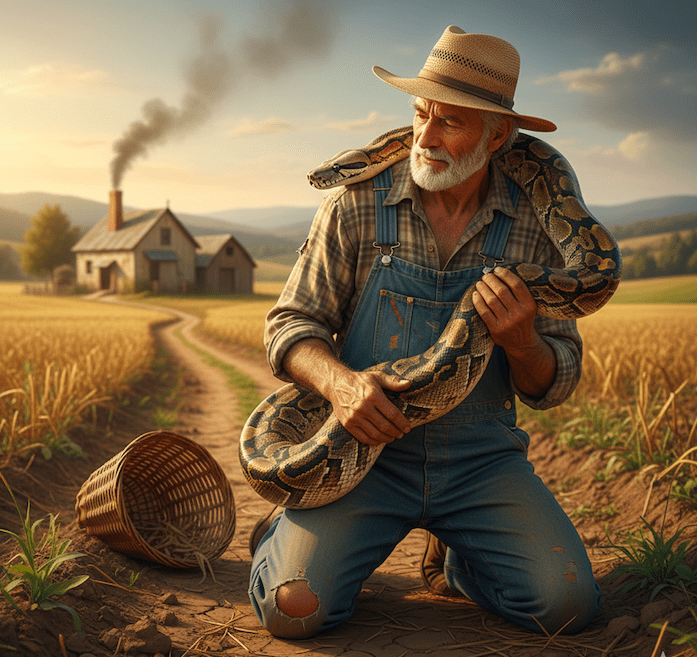
Near a stone, he saw a snake lying very still.
The farmer felt sorry for it. He thought only about warming it quickly. Without asking for help, he lifted it and placed it inside his coat.
In this old fable, warmth made the snake move again. The farmer felt pleased. He believed his kind act meant the animal would be safe to hold.
Then the snake bit him.
He cried out and stepped back. His coat fell open, and the snake moved away into the grass.
“I tried to help,” the farmer said. “Why did this happen?”
A person on the road heard him and came to help. They quickly sought medical care.
Later, the farmer thought about the moment beside the stone. His wish to help had been real. But he had not known how to help safely.
He had treated a wild animal like a small pet. He had also expected it to understand his good intention.
The next winter, he saw another animal that seemed in trouble. This time, he kept his distance. He asked a trained person what to do.
He did not stop being kind. He changed the way he acted.
When a neighbour heard the story, she said, “Perhaps it is better never to help.”
The farmer shook his head.
“That is not what I learned. I learned to think before I touch. Some help needs people with the right skills.”
He looked at his warm coat hanging by the door. The mistake had cost him dearly, but it could still teach him something useful.
Kindness was not a promise that nothing bad would happen. Care also meant noticing danger and asking for support.
The lesson: A kind wish is important, but help must also be safe.
Think about it: Do not handle a snake in real life. Get help from a trusted adult and trained services. Can you think of another situation where the safest help is calling someone who knows what to do?
Earlier short Hindi version
हिंदी: किसान और साँप
एक ठंडी सर्दियों की शाम, एक दयालु किसान ने सड़क पर एक साँप को सख्त और जमा हुआ देखा।
दया आने पर, उसने उसे उठाया और अपनी कोट के अंदर रख लिया ताकि उसे अपनी शरीर की गर्मी से ऊष्मा मिल सके।
जैसे-जैसे साँप गर्म हुआ, वह जीवित हो उठा। लेकिन आभारी होने के बजाय, उसने अपने ज़हरीले दाँतों से किसान की छाती में डस लिया।
किसान दर्द से चिल्लाया और साँप को दूर फेंक दिया। "दुष्ट प्राणी!" वह हांफता हुआ बोला। "मैंने तुम्हारी जान बचाई, और यह तुम्हारा आभार है?"
साँप ने ठंडे स्वर में फुफकारते हुए कहा, "तुम जानते थे कि मैं साँप हूँ जब तुमने मुझे उठाया था।"
किसान, अपनी गलती बहुत देर से समझते हुए, ज़हर से पीड़ित रहा जबकि साँप रेंगता हुआ दूर चला गया।
शिक्षा: दुष्टों पर दया दिखाना अक्सर नुकसान की ओर ले जाता है। किसी पर भरोसा करने से पहले उसकी वास्तविक प्रकृति को जानो।
Earlier short German version
Deutsch: Der Bauer und die Schlange
An einem kalten Winterabend fand ein gutherziger Bauer eine Schlange, die steif und gefroren auf der Straße lag.
Aus Mitleid hob er sie auf und steckte sie in seinen Mantel, um sie mit seiner eigenen Körperwärme zu erwärmen.
Als die Schlange warm wurde, erwachte sie zum Leben.
Aber anstatt dankbar zu sein, biss sie dem Bauer mit ihren giftigen Zähnen in die Brust.
Der Bauer schrie vor Schmerz auf und warf die Schlange weg. "Du böses Geschöpf!", keuchte er.
"Ich habe dir das Leben gerettet, und so dankst du mir?"
Die Schlange zischte kalt: "Du wusstest, dass ich eine Schlange war, als du mich aufhobst."
Der Bauer, der seinen Fehler zu spät erkannte, litt unter dem Gift, während die Schlange davonkroch.
Moral: Güte gegenüber Boshaften führt oft zu Leid. Erkenne das wahre Wesen eines Menschen, bevor du ihm vertraust.
7. King Midas and the Golden Touch
English story
King Midas had rooms full of gold. Yet each morning, he walked through them and wished for more.
One day, he was offered a wish. He could have asked for health, peace or time with his family.
Instead, he said, “Let everything I touch turn to gold.”
The wish came true.
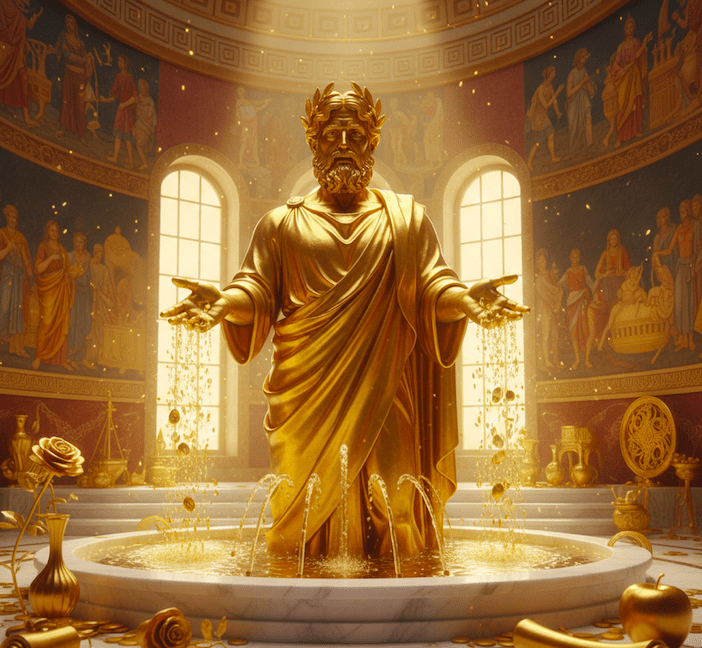
Midas touched a chair. It shone. He touched a flower. Its soft petals became hard gold.
He laughed and ran through the garden, turning small things into treasure. He did not notice that the flowers no longer had a smell.
At lunch, he picked up a piece of bread. It became gold before it reached his mouth.
He lifted a cup. The drink changed too. He was hungry and thirsty, but the table could not help him.
For the first time, the gift felt frightening.
His daughter ran into the room. She saw his worried face and reached for him. Before he could stop her, she turned into a golden figure.
The room became silent.
Midas called her name. No voice answered. All his gold could not give him the sound he wanted.
He begged for the wish to be taken away.
In the story, he was told to wash in a river. He ran there without stopping to collect a single coin.
When he returned, the strange power was gone. His daughter was alive again. The flowers were soft, and his bread was ordinary bread.
He held his daughter’s hand. Then they ate a simple meal together.
A servant asked what treasure he would like brought from the store room.
“Nothing,” Midas replied. “Please bring another chair. Sit with us.”
That evening, he walked through the garden. He looked at colours he could not spend and heard laughter he could not buy.
For once, he did not wish that either was gold.
The lesson: Money cannot replace food, love, health or time with people we care about.
Think about it: Which ordinary things did Midas only notice after losing them? What part of a good day is valuable without costing much money?
Earlier short Hindi version
हिंदी: मिडास का स्पर्श
राजा मिडास बहुत धनी था, लेकिन उसे सबसे ज्यादा सोना पसंद था। एक दिन, उसने देवता डायोनिसस का एक उपकार किया,
जिसने उसे एक इच्छा पूरी करने का वादा किया। लालच में, मिडास ने इच्छा की कि जो कुछ भी वह छुए वह सोना बन जाए। उसकी इच्छा पूरी हो गई।
खुशी से उन्मत्त होकर, उसने एक मेज, एक फूल और एक पत्थर को छुआ—सब शुद्ध सोने में बदल गए।
लेकिन जब वह खाने बैठा, तो उसकी रोटी और शराब भी सोने में बदल गई, और वह उन्हें नहीं खा सका। उसकी खुशी डर में बदल गई।
तभी, उसकी प्यारी बेटी उसे गले लगाने दौड़ी, और जिस पल उसने उसे गले लगाया, वह एक बेजान सोने की मूर्ति में बदल गई।
भयभीत होकर, मिडास ने डायोनिसस से यह श्राप वापस लेने की विनती की।
देवता ने उसे एक विशेष नदी में अपने हाथ धोने को कहा। मिडास ने ऐसा किया, और शक्ति उलट गई।
उसने अपनी बेटी को गले लगाया, जो जीवित हो उठी। उस दिन से, उसने दुनिया के सारे सोने से ज्यादा प्यार और सादगी भरी खुशियों को महत्व दिया।
शिक्षा: भौतिक धन की लालच जीवन के सच्चे खजाने—प्यार, रिश्ते और साधारण सुखों—को नष्ट कर सकती है।
Earlier short German version
Deutsch: Die Midas-Berührung
König Midas war sehr reich, aber er liebte Gold mehr als alles andere.
Eines Tages tat er dem Gott Dionysos einen Gefallen, der ihm anbot, einen Wunsch zu erfüllen.
Gierig wünschte sich Midas, dass alles, was er berührte, zu Gold werden würde. Sein Wunsch wurde gewährt.
Überglücklich berührte er einen Tisch, eine Blume und einen Stein – alle wurden zu purem Gold.
Aber als er sich zum Essen setzte, verwandelten sich sein Brot und sein Wein ebenfalls in Gold, und er konnte sie nicht verzehren.
Seine Freude schlug in Angst um. Dann lief seine geliebte Tochter auf ihn zu, um ihn zu umarmen,
und in dem Moment, als er sie umarmte, verwandelte sie sich in eine leblose goldene Statue.
Entsetzt bat Midas Dionysos, den Fluch zurückzunehmen.
Der Gott wies ihn an, seine Hände in einem bestimmten Fluss zu waschen.
Midas tat dies, und die Kraft wurde aufgehoben. Er umarmte seine Tochter, die wieder zum Leben erwachte.
Von diesem Tag an schätzte er Liebe und einfache Freuden mehr als alles Gold der Welt.
Moral: Gier nach materiellem Reichtum kann die wahren Schätze des Lebens zerstören – Liebe, Beziehungen und einfache Freuden.
8. The Fox and the Goat
English story
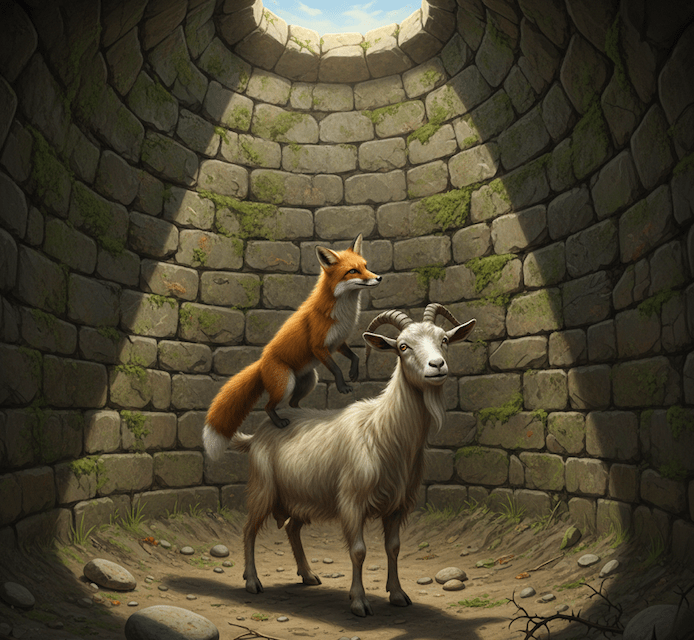
A fox leaned too far over a well and fell in. The water was shallow enough to stand in, but the walls were too high to climb.
He tried several times. His feet slipped on the wet stone.
Then a goat looked over the edge.
“Is the water good?” she asked. She had walked a long way and was thirsty.
The fox saw a chance to escape.
“The best I have ever tasted,” he called. “Come down and try it.”
The goat did not ask how she would get out. She jumped in and drank.
When she finished, she looked up. The top of the well seemed much further away now.
“How do we leave?” she asked.
“I have a plan,” said the fox. “Stand against the wall. I can climb onto your back. Once I am out, I will help you.”
The goat wanted to trust him. She put her front feet on the stone.
The fox climbed up her back and reached the top. He stood safely on the ground.
“Now help me,” she called.
But he had only been planning for himself. He walked away, leaving the goat below.
At first, the goat shouted angrily. Then she stopped wasting her strength. She called clearly for help whenever she heard someone on the road.
A farmer finally heard her. He did not climb into the well. He fetched people and equipment that could help safely.
After she was free, the goat rested in the shade.
The farmer asked why she had jumped in.
“I asked whether the water was good,” she said. “I forgot to ask about the way out.”
She had also learned that someone needing a favour might not be thinking about her safety.
The next time she found a new path, she looked at the whole route before starting.
The lesson: Think about the next step before you act. A promise is not always a safe plan.
Think about it: What questions could the goat ask before entering? In real life, stay away from wells and deep water. Ask a trusted adult for help instead of copying the animals.
Earlier short Hindi version
हिंदी: लोमड़ी और बकरी
एक प्यासी लोमड़ी एक गहरे कुएँ में गिर गई और बाहर नहीं निकल सकी। कुछ देर बाद, एक प्यासी बकरी वहाँ से गुज़री और कुएँ में झाँक कर देखा।
लोमड़ी को देखकर, उसने पूछा, "क्या पानी अच्छा है?"
चालाक लोमड़ी को अपना मौका दिखा। "ओह, यह दुनिया का सबसे शानदार पानी है! नीचे आकर इसे आज़माओ!" उसने कहा।
बिना सोचे, बकरी कूद गई और अपनी प्यास बुझाई।
फिर बकरी ने ऊपर देखा और महसूस किया कि वह भी फँस गई है। "हम कैसे बाहर निकलेंगे?" उसने पूछा।
लोमड़ी ने कहा, "मेरे पास एक विचार है। अपने अगले पैरों को दीवार पर टिकाओ और अपने सींग सीधे करो।
मैं तुम्हारी पीठ पर चढ़ जाऊँगा और फिर तुम्हें ऊपर खींच लूँगा।" बकरी मान गई।
लोमड़ी कुएँ से बाहर निकली, बकरी की ओर नीचे देखा, और बोली, "तुम्हें कूदने से पहले यह सोचना चाहिए था कि कैसे बाहर निकलोगी।"
और वह चली गई, बकरी को फँसा हुआ छोड़कर।
शिक्षा: कूदने से पहले देख लो। कार्य करने से पहले हमेशा उसके परिणामों के बारे में सोचो।
Earlier short German version
Deutsch: Der Fuchs und die Ziege
Ein durstiger Fuchs fiel in einen tiefen Brunnen und kam nicht mehr heraus.
Nach einer Weile kam eine durstige Ziege vorbei und schaute in den Brunnen.
Als sie den Fuchs sah, fragte sie: "Ist das Wasser gut?"
Der listige Fuchs sah seine Chance. "Oh, es ist das herrlichste Wasser der Welt! Komm herunter und probier es!", sagte er.
Ohne nachzudenken, sprang die Ziege hinein und trank sich satt.
Dann schaute die Ziege nach oben und merkte, dass sie ebenfalls gefangen war.
"Wie kommen wir wieder raus?", fragte sie.
Der Fuchs sagte: "Ich habe eine Idee. Stell deine Vorderbeine gegen die Wand und streck deine Hörner gerade aus.
Ich klettere auf deinen Rücken und ziehe dich dann hoch." Die Ziege stimmte zu.
Der Fuchs kletterte aus dem Brunnen, schaute auf die Ziege hinunter und sagte:
"Du hättest darüber nachdenken sollen, wie du wieder herauskommst, bevor du hineingesprungen bist." Und er ging weg und ließ die Ziege im Stich.
Moral: Erst denken, dann handeln. Denke immer an die Konsequenzen, bevor du handelst.
9. The Greedy Dog

English story
A dog was given a bone near a farm kitchen. He carried it carefully, looking for a quiet place to rest.
The day had been long. He was pleased to have something of his own.
A small bridge crossed the river between the farm and his favourite field. Halfway over, he stopped to look down.
A dog stood in the water below him. It seemed to carry a fine bone too.
The first dog stared. The other dog stared back.
He lifted his head. So did the dog below. He moved one paw. Small waves moved through the picture.
It was his own reflection, but he did not know that. He only thought about the bone he could see.
“Why should he have that one as well?” he wondered.
A bird called from the fence. The dog barely heard it. His whole world had become the thing he wanted in the river.
He leaned over the edge. His real bone was still safe between his teeth.
Then he opened his mouth to bark at the other dog.
His bone fell with a splash.
The picture broke into shining pieces. The dog jumped back, shocked. When the water became calm, the dog below had no bone either.
He walked to the bank and searched, but the river had carried it away. He did not enter the dangerous water.
The bird landed nearby.
“What happened?” she asked.
“I wanted two bones,” he said. “Now I have none.”
He lay in the grass for a while. At first, he felt angry with the river. Then he remembered that the river had not asked him to open his mouth.
The next day, a friend shared some food with him. The dog ate slowly and thanked him. He did not spend the meal searching for something larger.
The lesson: Enjoy what you have instead of losing it while chasing more.
Think about it: The dog changed from happy to unhappy before anything was taken from him. What changed his thinking? How can you pause when you start wanting something only because another person has it?
Earlier short Hindi version
हिंदी: लालची कुत्ता
एक कुत्ता अपने मुँह में एक रसीली हड्डी लिए एक शांत नदी के ऊपर बने पुल को पार कर रहा था।
पानी में नीचे देखते हुए, उसने अपनी ही परछाई देखी। यह सोचकर कि यह एक और कुत्ता है जिसके पास बड़ी हड्डी है,
वह लालची हो गया और उस हड्डी को भी लेने का फैसला किया।
उसने परछाई पर गुर्राया, और जैसे ही उसने दूसरी हड्डी छीनने के लिए अपना मुँह खोला,
उसकी अपनी हड्डी टप-से नदी में गिर गई और तल में डूब गई। कुत्ता कुछ नहीं के साथ रह गया।
धारा ने जल्दी से उसकी हड्डी बहा दी, और वह बस उसे गायब होते हुए देख सकता था।
वह उस रात भूखा ही घर चला गया, अपने लालच पर पछताता हुआ।
शिक्षा: जो तुम्हारे पास नहीं है उसके लालच में जो तुम्हारे पास है उसे मत खो दो। लालच नुकसान की ओर ले जाता है।
Earlier short German version
Deutsch: Der gierige Hund
Ein Hund trug einen saftigen Knochen im Maul, als er eine Brücke über einen ruhigen Fluss überquerte.
Als er in das Wasser hinunterschaute, sah er sein eigenes Spiegelbild. In dem Glauben, e
s sei ein anderer Hund mit einem größeren Knochen, wurde er gierig und beschloss, auch diesen Knochen zu nehmen.
Er knurrte das Spiegelbild an, und als er sein Maul aufmachte, um den anderen Knochen zu schnappen,
fiel sein eigener Knochen mit einem Platscher in den Fluss und sank auf den Grund.
Dem Hund blieb nichts übrig. Die Strömung trug seinen Knochen schnell davon, und er konnte nur zusehen, wie er verschwand.
Er ging an diesem Abend hungrig nach Hause und bereute seine Gier.
Moral: Verliere nicht, was du hast, indem du begehrst, was du nicht hast. Gier führt zum Verlust.
10. The Oak and the Reed

English story
A tall oak tree grew beside a river. Near its roots stood a thin reed. A reed is a long, light plant that grows near water.
When a breeze passed, the reed bent. The oak hardly moved.
“Look at you,” the oak said. “Even a little wind makes you bow.”
The reed lifted itself again. “That is how I move with it.”
“I never bow,” the oak replied proudly.
Through spring, birds made homes in the oak. The reed enjoyed the shade. It did not dislike the tree. It only wished the oak would stop confusing movement with weakness.
One evening, dark clouds covered the sky. The river became rough. Birds left the branches and found safer places.
The wind began to push hard against the oak. The tree held its branches stiffly.
“I will not move,” it said.
The reed bent low. It moved as the wind changed. When one gust passed, it rose a little before bending again.
Rain filled the ground. The oak’s roots began to pull against the wet soil. Still, the tree tried to stand exactly as before.
Then a great gust came. The oak fell across the bank.
By morning, the storm had passed. The reed slowly stood upright. Around it lay leaves and broken branches.
The forest had changed in one night.
The reed looked at the fallen tree with sadness. This was not a time to laugh about being right. It had lost a neighbour that once gave shade and shelter.
A bird returned and rested on a low branch. The reed moved gently beside it.
The storm had shown that strength has more than one form. Sometimes, staying safe means changing how you stand, moving out of the way or asking for help.
The lesson: Being flexible can help us through change. We do not always need to fight every push.
Think about it: This is a fable, not a rule about real trees. When has changing your plan helped you? What is the difference between giving up and finding another safe way?
Earlier short Hindi version
हिंदी: बलूत और सरकंडा
एक विशाल बलूत का पेड़ नदी के किनारे गर्व से खड़ा था, जहाँ एक पतला, लचीला सरकंडा उगता था।
बलूत अक्सर सरकंडे का मज़ाक उड़ाता था। "देखो तुम कितने कमजोर हो! थोड़ी सी हवा तुम्हें झुका देती है।
मैं, दूसरी ओर, सबसे तेज़ हवाओं के खिलाफ मजबूती और ऊँचाई से खड़ा रहता हूँ।"
सरकंडे ने विनम्रता से उत्तर दिया, "टूटने से बेहतर झुकना है।"
एक दिन, एक भयंकर तूफान ने पूरे क्षेत्र को झकझोर दिया।
शक्तिशाली बलूत कड़ा खड़ा रहा, झुकने से इनकार करते हुए। उसने अपनी पूरी ताकत से हवा से लड़ाई लड़ी।
हालाँकि, सरकंडा जमीन के पास झुक गया, तेज़ झोंकों के साथ लहराते हुए।
जब तूफान थमा, तो बलूत जमीन पर उखड़ा और टूटा हुआ पड़ा था। सरकंडा सीधा खड़ा हो गया,
बिना किसी नुकसान के, और गिरे हुए विशालकाय से फुसफुसाया, "शक्ति हमेशा कठोर होने के बारे में नहीं होती।
कभी-कभी, लचीलापन ही लचीलेपन में निहित होता है।"
शिक्षा: चुनौतियों के सामने विनम्रता और लचीलापन, हठीले अहंकार से बड़ी शक्तियाँ हैं।
Earlier short German version
Deutsch: Die Eiche und das Schilfrohr
Eine riesige Eiche stand stolz neben einem Fluss, wo ein dünnes, biegsames Schilfrohr wuchs.
Die Eiche verspottete das Schilfrohr oft. "Schau, wie schwach du bist! Die geringste Brise lässt dich sich verbeugen.
Ich hingegen stehe stark und groß gegen die mächtigsten Winde."
Das Schilfrohr antwortete bescheiden: "Es ist besser, sich zu beugen, als zu brechen."
Eines Tages fegte ein heftiger Sturm durch das Land. Die mächtige Eiche stand starr und weigerte sich nachzugeben.
Sie kämpfte mit aller Kraft gegen den Wind. Das Schilfrohr jedoch beugte sich tief zu Boden und wiegte sich im starken Wind.
Als der Sturm vorüber war, lag die Eiche entwurzelt und zerbrochen am Boden.
Das Schilfrohr richtete sich unversehrt auf und flüsterte dem gefallenen Riesen zu: "Stärke besteht nicht immer darin,
starr zu sein. Manchmal liegt Widerstandsfähigkeit in der Flexibilität."
Moral: Demut und Flexibilität angesichts von Herausforderungen sind größere Stärken als sturzer Stolz.


Comments (0)
No comments yet. Be the first to comment!