
Backend & APIs Topic
C4 Model in Software Architecture
The C4 model is a visual framework for describing and documenting software architecture in a hierarchical, layered way. Created by Simon Brown, it's named after the four main diagram types: Context, Containers, Components, and Code.
Core Principles
-
Hierarchical: Four levels of abstraction, from high-level system overview to low-level code
-
Abstraction: Each level hides unnecessary details
-
Audience-specific: Different diagrams for different stakeholders
-
Consistent notation: Uses simple shapes and relationships
The Four Levels
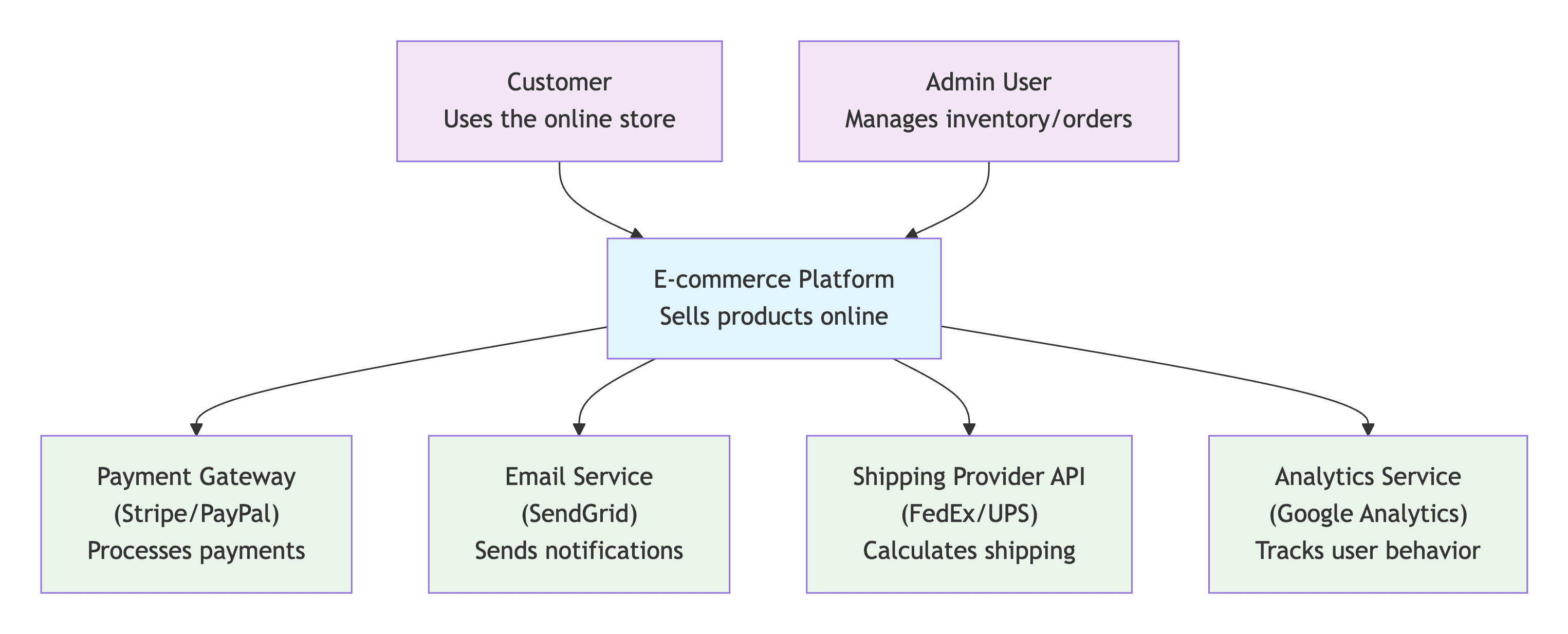
1. Context Diagram (Level 1: Highest)
Purpose: Shows the big picture - system scope and external interactions
Audience: Non-technical stakeholders, business people
Elements:
-
Your system as a single box
-
External systems and users
-
Interactions between them
Example: An e-commerce system interacting with customers, payment gateways, and inventory systems.
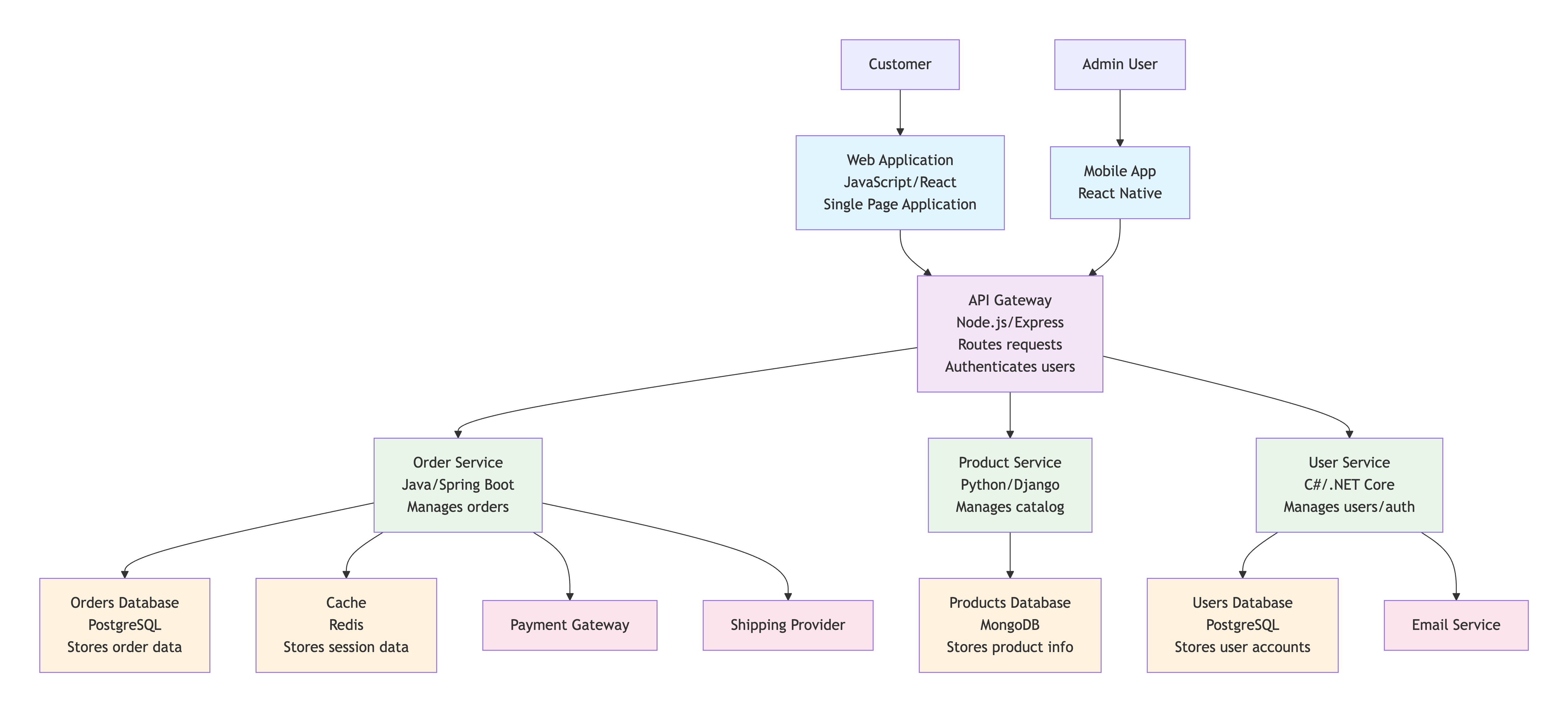
2. Container Diagram (Level 2)
Purpose: Shows the high-level technology choices and how responsibilities are distributed
Audience: Technical stakeholders, DevOps, architects
Elements:
-
Containers (applications, data stores, microservices)
-
How containers communicate
-
Technology stack indications
Example: Web application, mobile app, API gateway, database, cache servers.
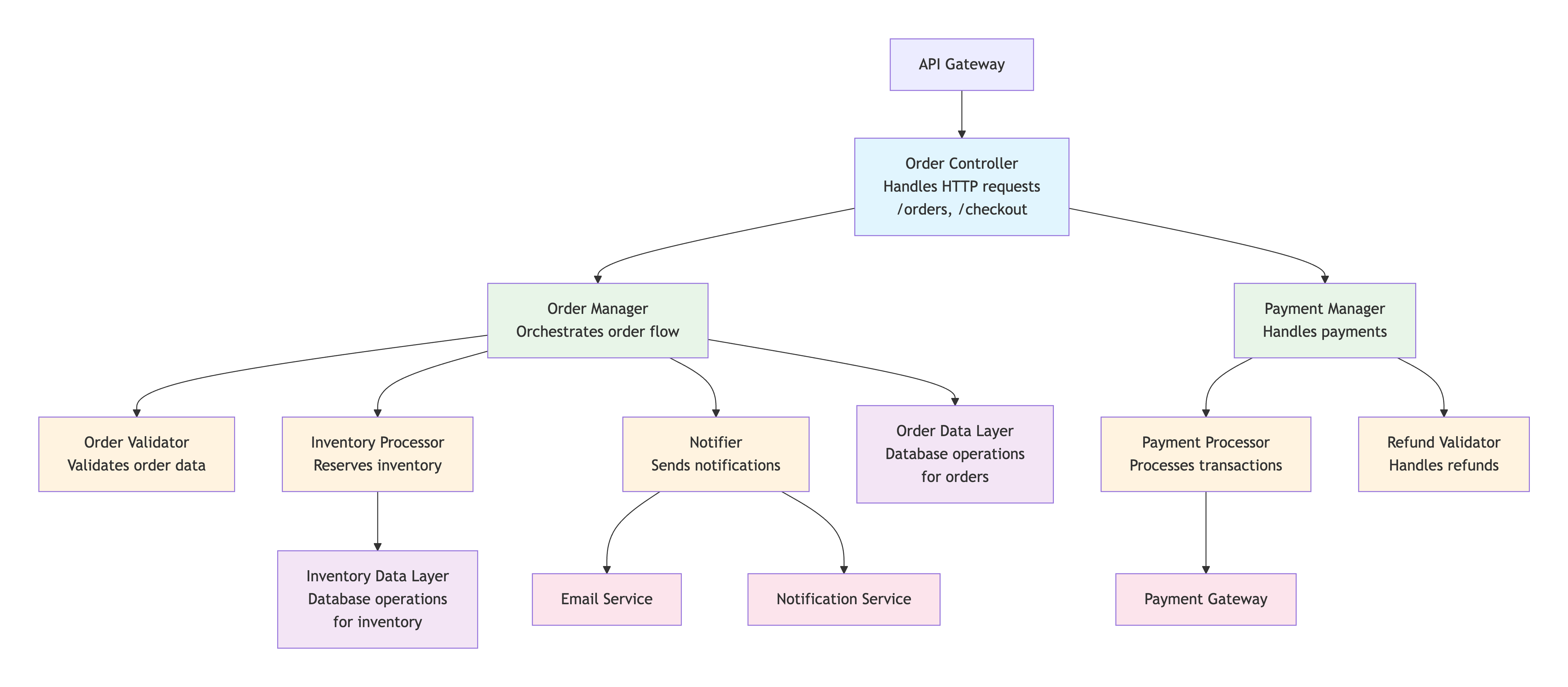
3. Component Diagram (Level 3)
Purpose: Shows how containers are broken into components and their interactions
Audience: Developers, architects
Elements:
-
Components within a single container
-
Component responsibilities
-
Relationships between components
Example: Within a web app: Authentication component, Order processing component, Payment component.
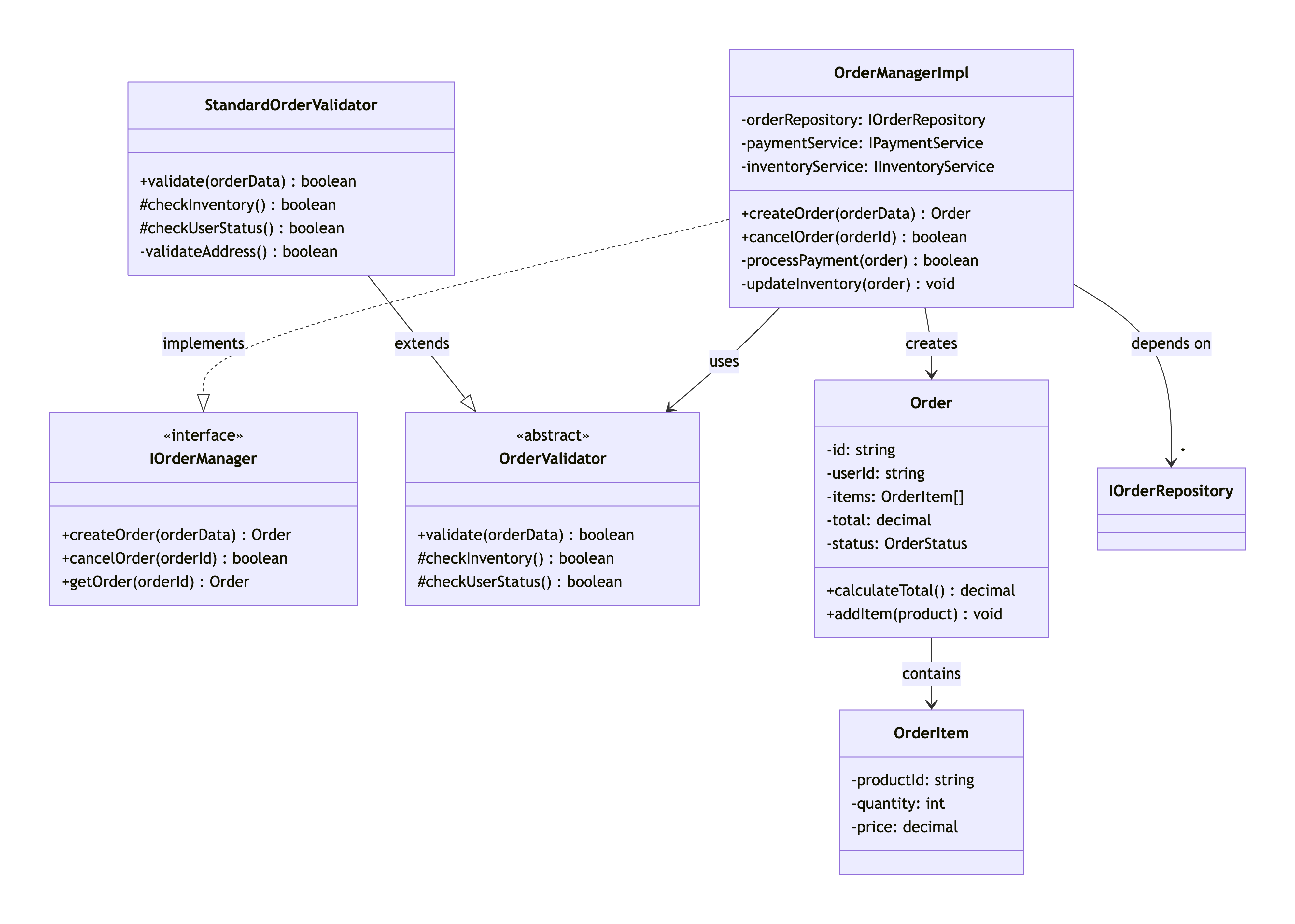
4. Code Diagram (Level 4: Most detailed)
Purpose: Shows how components are implemented as code
Audience: Developers
Elements:
-
Classes, interfaces, functions
-
Relationships between them
-
Often generated from code (UML-like)
Key Notation
-
Boxes: Represent systems, containers, components
-
Lines: Show relationships/communication
-
Labels: Describe interactions
-
Shapes: Rectangles for software elements, people shapes for users
Benefits
-
Progressive disclosure: Information revealed as needed
-
Communication: Bridges gap between technical and non-technical stakeholders
-
Documentation: Creates living architecture documentation
-
Consistency: Standardized approach across teams
-
Agile-friendly: Lightweight and easy to maintain
Example for an E-commerce System
Context: "Online Store" interacting with Customers, Payment Provider, Email Service
Containers: Web App (React), Mobile App, API (Node.js), Database (PostgreSQL), Cache (Redis)
Components: In API → UserService, ProductCatalog, OrderProcessor, PaymentGateway
Code: Classes in OrderProcessor → Order, OrderValidator, PaymentCalculator
Tools for C4 Diagrams
-
Structurizr (by the creator)
-
PlantUML with C4 plugin
-
Miro, Lucidchart templates
-
Draw.io with C4 library
-
Manual drawing with standard shapes
E-commerce Platform - C4 Model Example
Level 1: Context Diagram
Level 2: Container Diagram
Level 3: Component Diagram
Level 4: Code Diagram
The C4 model helps teams create comprehensible architecture diagrams that tell different stories to different audiences, making complex systems understandable at various levels of detail.


Comments (0)
No comments yet. Be the first to comment!