
Cybersecurity Topic
API Security
1. API FUNDAMENTALS
REST vs GraphQL Security Concerns
REST API Security:
text
GET /api/users/123
POST /api/users
PUT /api/users/123
DELETE /api/users/123
Security Concerns:
-
Verbose Error Messages: Stack traces in responses
-
Information Disclosure: Via OPTIONS, HEAD methods
-
Insecure Direct Object References: Predictable IDs
-
Mass Assignment: User can update any field
-
Missing Rate Limiting: Per endpoint basis
GraphQL Security:
graphql
# Query
{
  user(id: "123") {
    name
    email
    creditCard {
      number
      expiry
    }
  }
}

# Mutation
mutation {
  updateUser(id: "123", input: {
    email: "attacker@evil.com",
    role: "admin"
  }) {
    id
    role
  }
}
Security Concerns:
-
Over-querying/DoS:
graphql
# Query batching attack
query {
  user1: user(id: "1") { posts { comments { user { posts { ... } } } } }
  user2: user(id: "2") { posts { comments { user { posts { ... } } } } }
  # ... repeat 1000 times
}
-
Introspection Abuse:
graphql
# Exposes schema (often enabled in production)
{
  __schema {
    types { name fields { name type { name } } }
  }
}
-
Field-Level Authorization: Missing per-field checks
-
Circular Queries: Infinite nested queries
-
Query Complexity: No query depth/size limits
Comparison Table:
| Aspect | REST | GraphQL |
|---|---|---|
| Rate Limiting | Per endpoint | Query complexity based |
| Authorization | Resource-level | Field/resource-level |
| Data Exposure | Fixed responses | Client-defined responses |
| Error Handling | HTTP status codes | Generic "errors" array |
| Caching | HTTP caching | Complex, query-specific |
API Authentication & Authorization Models
Authentication Methods:
-
API Keys:
http
GET /api/data HTTP/1.1
X-API-Key: abc123def456
-
Pros: Simple, easy to implement
-
Cons: No expiration, easily leaked, no user context
-
JWT (JSON Web Tokens):
json
{
  "alg": "HS256",
  "typ": "JWT"
}
{
  "sub": "1234567890",
  "name": "John Doe",
  "admin": true,
  "iat": 1516239022,
  "exp": 1516242622
}
-
Security Concerns:
-
None algorithm attacks
-
Weak HMAC secrets
-
Storing sensitive data in payload
-
Lack of token revocation
-
-
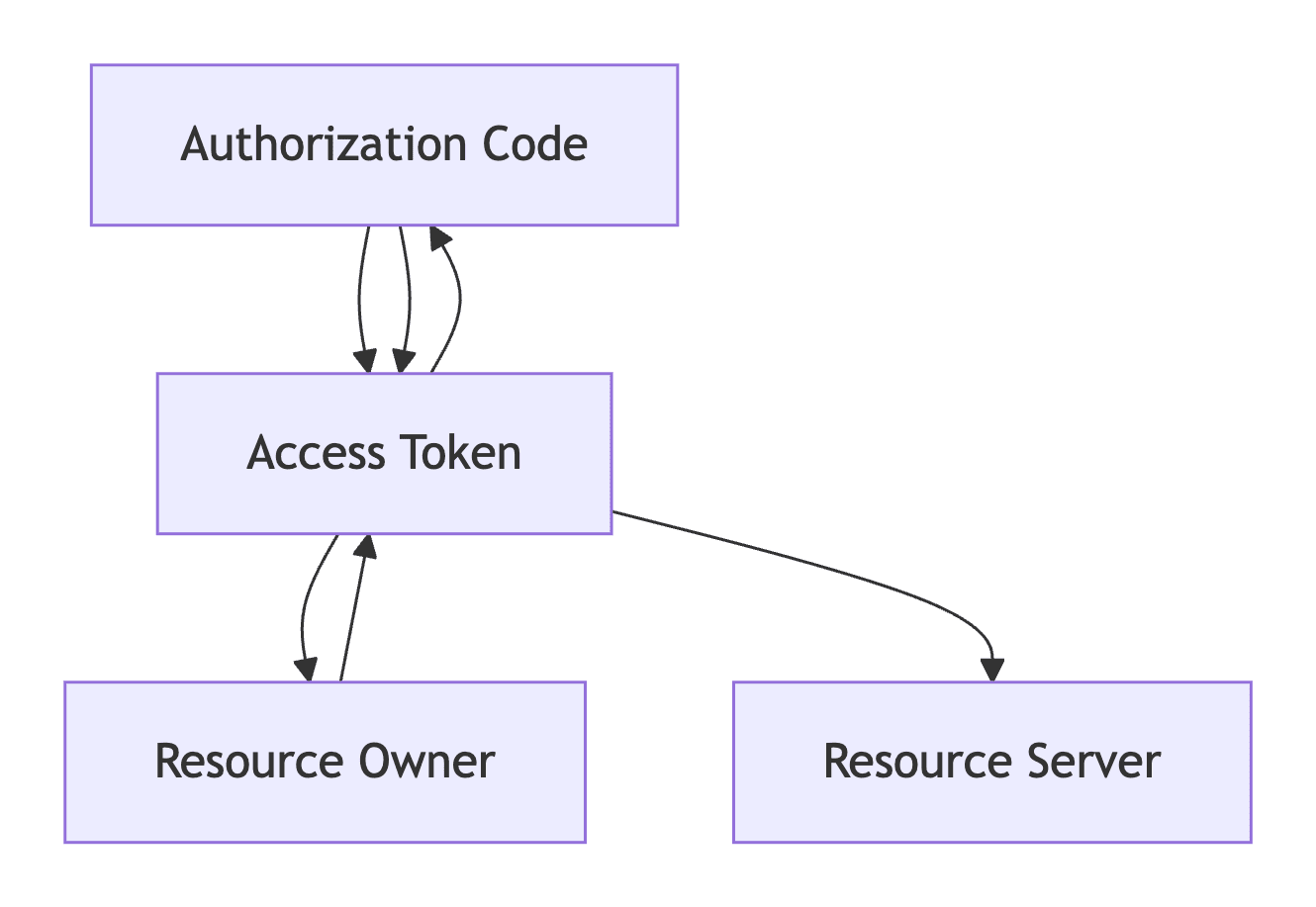
OAuth 2.0 Flows:
Authorization Models:
-
RBAC (Role-Based Access Control):
json
{
  "roles": ["user", "moderator", "admin"],
  "permissions": {
    "user": ["read:own_profile", "write:own_posts"],
    "admin": ["*"]
  }
}
-
ABAC (Attribute-Based Access Control):
json
{
  "rules": [
    {
      "effect": "allow",
      "action": "read",
      "resource": "document",
      "condition": {
        "user.department": "==",
        "document.department": true
      }
    }
  ]
}
-
ReBAC (Relationship-Based Access Control):
-
Check user-resource relationships
-
Example: Can user edit document if they're the owner or shared collaborator?
API Gateways & Rate Limiting
API Gateway Features:
text
Client → API Gateway → Microservices
      ↓               ↓
  Authentication   Rate Limiting
      ↓               ↓
  Authorization    Logging
      ↓               ↓
    TLS Termination   Caching
Common Gateway Implementations:
-
Kong: Open-source, plugin-based
-
AWS API Gateway: Serverless, integrated with AWS ecosystem
-
Apigee: Google Cloud, enterprise features
-
Tyk: Open-source, Go-based
Rate Limiting Strategies:
-
Token Bucket Algorithm:
python
class TokenBucket:
    def __init__(self, capacity, refill_rate):
        self.capacity = capacity  # Max tokens
        self.tokens = capacity
        self.refill_rate = refill_rate  # tokens/second
        self.last_refill = time.time()

    def consume(self, tokens=1):
        self._refill()
        if self.tokens >= tokens:
            self.tokens -= tokens
            return True
        return False
-
Fixed Window Counter:
python
# Redis implementation
import redis
r = redis.Redis()

def check_rate_limit(user_id, limit=100, window=3600):
    key = f"rate_limit:{user_id}:{int(time.time() // window)}"
    current = r.incr(key)
    if current == 1:
        r.expire(key, window)
    return current <= limit
-
Sliding Window Log:
python
def sliding_window_rate_limit(user_id, limit=100, window=60):
    key = f"rate_limit:{user_id}"
    now = time.time()
    window_start = now - window

    # Remove old entries
    r.zremrangebyscore(key, 0, window_start)

    # Count requests in window
    request_count = r.zcard(key)

    if request_count < limit:
        r.zadd(key, {str(now): now})
        r.expire(key, window)
        return True

    return False
Rate Limiting Headers (RFC 6585):
http
HTTP/1.1 429 Too Many Requests
Retry-After: 3600
X-RateLimit-Limit: 100
X-RateLimit-Remaining: 0
X-RateLimit-Reset: 1640995200
2. COMMON API VULNERABILITIES
Broken Object Level Authorization (BOLA/IDOR)
Vulnerable Code:
python
# Vulnerable - No authorization check
@app.route('/api/users/<user_id>/documents')
def get_user_documents(user_id):
    documents = db.query("SELECT * FROM documents WHERE user_id = %s", user_id)
    return jsonify(documents)

# Attack
GET /api/users/123/documents  # Attacker changes to 124
Prevention:
python
# Secure implementation
@app.route('/api/users/<user_id>/documents')
@require_auth
def get_user_documents(user_id):
    # Verify requesting user owns the resource
    if current_user.id != int(user_id) and not current_user.is_admin:
        abort(403)

    documents = Document.query.filter_by(user_id=user_id).all()
    return jsonify([doc.to_dict() for doc in documents])
Advanced BOLA Patterns:
-
Indirect IDOR:
http
GET /api/files?name=report.pdf # Change to admin_report.pdf
-
Mass Assignment + IDOR:
http
PUT /api/users/123
Content-Type: application/json

{"id": 456, "role": "admin"}  # Changes ID and role
Excessive Data Exposure
GraphQL Example:
graphql
# Backend returns full user object
type User {
  id: ID!
  username: String!
  email: String!
  passwordHash: String!
  ssn: String!
  creditCard: CreditCard!
}

# Client only needs username
query {
  user(id: "123") {
    username
  }
}
# But receives ALL fields!
REST Example:
json
{
  "user": {
    "id": 123,
    "username": "johndoe",
    "email": "john@example.com",
    "password_hash": "$2a$12$...",  // Should not be exposed!
    "ssn": "123-45-6789",
    "internal_notes": "VIP customer"
  }
}
Prevention Strategies:
-
Response Filtering:
python
# Django Rest Framework
class UserSerializer(serializers.ModelSerializer):
    class Meta:
        model = User
        fields = ['id', 'username', 'email']  # Explicit allow-list

    def to_representation(self, instance):
        data = super().to_representation(instance)
        if not self.context['request'].user.is_staff:
            data.pop('internal_notes', None)
        return data
-
GraphQL Field-Level Permissions:
python
# Graphene implementation
class UserType(DjangoObjectType):
    class Meta:
        model = User
        fields = ("id", "username", "email")

    @staticmethod
    def resolve_email(parent, info):
        # Only show email to the user themselves or admins
        if info.context.user.id == parent.id or info.context.user.is_staff:
            return parent.email
        return None
-
API Schema Enforcement:
yaml
# OpenAPI response schema
components:
  schemas:
    PublicUser:
      type: object
      properties:
        id:
          type: integer
        username:
          type: string
        # NO sensitive fields!
Mass Assignment
Vulnerable Code:
javascript
// Express.js vulnerable endpoint
app.put('/api/users/:id', async (req, res) => {
  // Direct assignment - attacker can set any field!
  const updatedUser = await User.findByIdAndUpdate(
    req.params.id,
    req.body,  // Attacker sends {role: 'admin'}
    { new: true }
  );
  res.json(updatedUser);
});
Attack Payload:
json
{
  "username": "attacker",
  "email": "attacker@evil.com",
  "role": "admin",
  "is_active": true,
  "balance": 1000000
}
Prevention:
-
Allow-List Approach:
python
# Django Rest Framework
class UserUpdateSerializer(serializers.ModelSerializer):
    class Meta:
        model = User
        fields = ['username', 'email']  # Only updatable fields

    # Extra validation
    def validate(self, data):
        if 'role' in self.initial_data:
            raise serializers.ValidationError("Cannot update role")
        return data
-
Block-List Approach (Less secure):
python
class UserUpdateSerializer(serializers.ModelSerializer):
    class Meta:
        model = User
        exclude = ['role', 'is_superuser', 'balance']
-
Different Serializers for Different Actions:
python
class PublicUserSerializer(serializers.ModelSerializer):
    # For public views
    class Meta:
        model = User
        fields = ['id', 'username']

class AdminUserSerializer(serializers.ModelSerializer):
    # For admin actions
    class Meta:
        model = User
        fields = '__all__'
Improper Asset Management
Common Issues:
-
Shadow/Orphaned APIs:
-
Old API versions still accessible
-
Internal/test APIs exposed publicly
-
Deprecated endpoints not disabled
-
-
Inadequate Documentation:
-
No API inventory
-
Missing changelogs
-
Undocumented endpoints
-
API Inventory Management:
yaml
# API inventory YAML
apis:
  - name: user-service
    version: v2.1.0
    base_url: https://api.company.com/v2
    status: active
    owner: team-identity
    security_level: public
    documentation: https://docs.company.com/api/user

  - name: legacy-user-service
    version: v1.0.0
    base_url: https://api.company.com/v1
    status: deprecated
    sunset_date: 2024-12-31
    owner: team-identity
    security_level: private
Versioning Strategies:
-
URI Versioning:
text
https://api.company.com/v1/users
https://api.company.com/v2/users
-
Header Versioning:
http
GET /users HTTP/1.1
Accept: application/vnd.company.v2+json
-
Query Parameter Versioning:
text
https://api.company.com/users?version=2
Deprecation Headers:
http
HTTP/1.1 200 OK
Deprecation: true
Sunset: Wed, 31 Dec 2025 23:59:59 GMT
Link: </v2/users>; rel="successor-version"
Injection Attacks in APIs
REST API Injection:
http
# SQL Injection
GET /api/users?search=admin' OR '1'='1

# NoSQL Injection
POST /api/search
Content-Type: application/json

{
  "query": {
    "$where": "function() { return this.role == 'admin' }"
  }
}

# Command Injection in file upload
POST /api/upload
Content-Type: multipart/form-data

file=`cat /etc/passwd`&name=;ls -la;
GraphQL Injection:
graphql
# Field injection
query {
  users(search: "admin\")) { UNION SELECT * FROM secret_table --"}) {
    id
    username
  }
}

# Directive injection
query {
  __schema {
    directives {
      name
      # Malicious nested query
      ... on __Directive {
        locations
      }
    }
  }
}
Prevention:
-
Input Validation with JSON Schema:
python
from jsonschema import validate

user_schema = {
    "type": "object",
    "properties": {
        "username": {"type": "string", "pattern": "^[a-zA-Z0-9_]{3,20}$"},
        "email": {"type": "string", "format": "email"},
        "age": {"type": "integer", "minimum": 0, "maximum": 150}
    },
    "required": ["username", "email"],
    "additionalProperties": False  # Prevent mass assignment
}

# Validate before processing
validate(instance=request.json, schema=user_schema)
-
GraphQL Query Analysis:
python
from graphql import validate, parse
from graphql.validation import validate_sdl

# Query depth limiting
MAX_DEPTH = 10

class DepthLimitingVisitor:
    def __init__(self, max_depth):
        self.max_depth = max_depth
        self.current_depth = 0

    def enter(self, node, key, parent, path, ancestors):
        if isinstance(node, Field):
            self.current_depth += 1
            if self.current_depth > self.max_depth:
                raise Exception(f"Query too deep: {self.current_depth}")

# Query cost/complexity limiting
QUERY_COST_RULES = {
    'User': 1,
    'Post': 2,
    'Comment': 1,
    'friends': {'multiplier': 5},
    'posts': {'multiplier': 10}
}
3. SECURITY CONTROLS
OAuth 2.0 & OpenID Connect Deep Dive
OAuth 2.0 Flows Comparison:
| Flow | Use Case | Security Considerations |
|---|---|---|
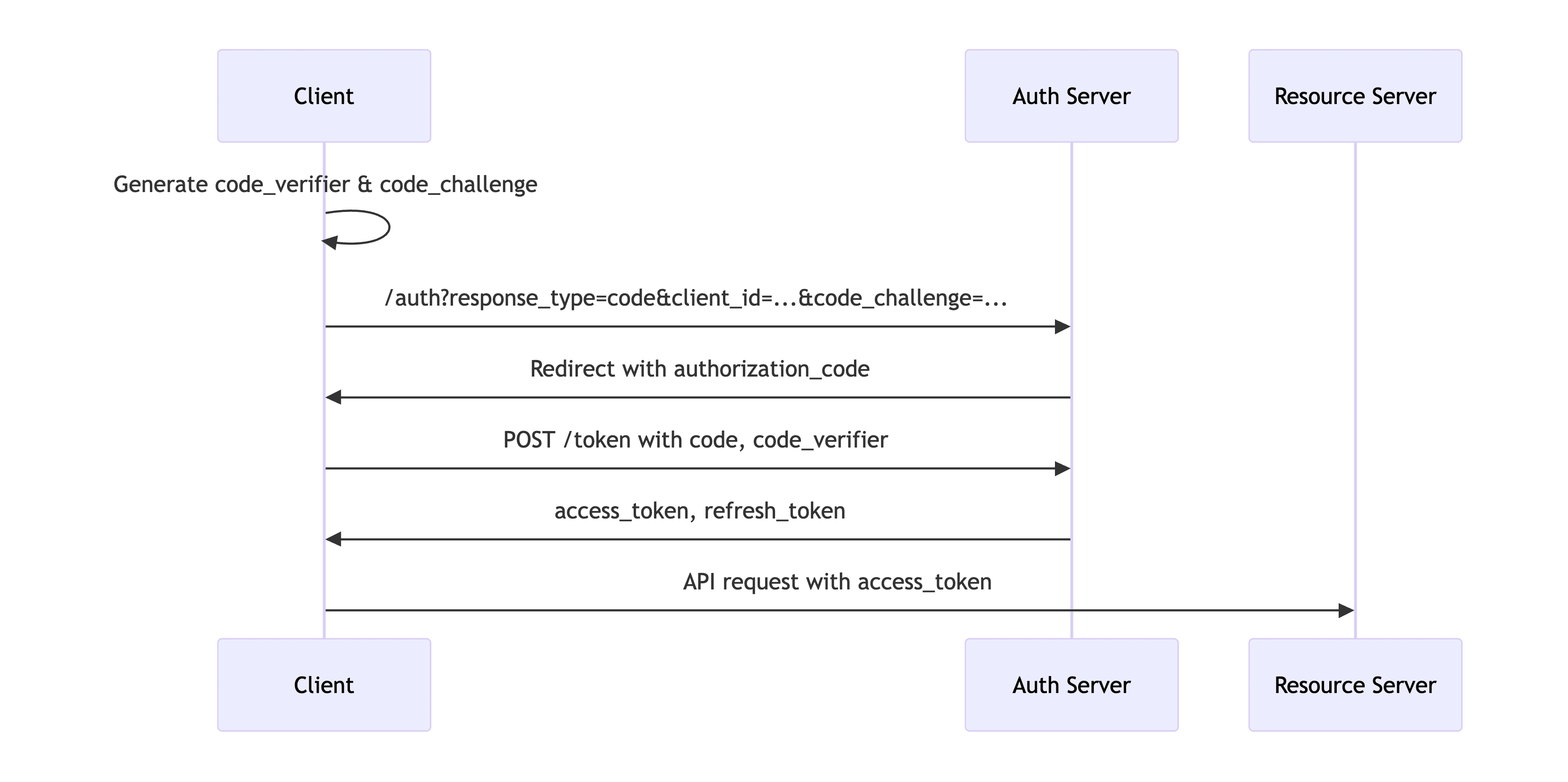
| Authorization Code | Web apps (server-side) | Most secure, uses PKCE for mobile/native |
| Implicit | Deprecated | Tokens in URL fragments, not recommended |
| Client Credentials | Server-to-server | No user context, machine-to-machine |
| Resource Owner Password | Legacy migration | Store credentials, avoid if possible |
| Device Code | IoT/CLI devices | Limited input devices |
Authorization Code Flow with PKCE:
OAuth Security Best Practices:
yaml
# OAuth configuration example
oauth_config:
  client_registration:
    require_https: true
    redirect_uri_validation:
      exact_match: true
      allow_wildcard: false

  token_management:
    access_token_lifetime: 3600  # 1 hour
    refresh_token_lifetime: 2592000  # 30 days
    refresh_token_rotation: true
    token_binding: required  # mTLS or DPoP

  security:
    require_pkce: true
    allowed_grant_types: ["authorization_code"]
    allowed_response_types: ["code"]
    enable_token_revocation: true
OpenID Connect Extensions:
json
{
  "id_token": {
    "iss": "https://auth.company.com",
    "sub": "123456",
    "aud": "client_id",
    "exp": 1640995200,
    "iat": 1640991600,
    "auth_time": 1640991000,
    "nonce": "abc123",
    "acr": "urn:mace:incommon:iap:silver",
    "amr": ["pwd", "mfa"],
    "claims": {
      "email": "user@example.com",
      "email_verified": true,
      "profile": "https://profile.url"
    }
  }
}
API Keys vs JWT
API Key Implementation:
python
class APIKeyAuth:
    def __init__(self):
        self.storage = RedisStorage()

    def create_api_key(self, user_id, permissions):
        # Generate cryptographically secure key
        key = secrets.token_urlsafe(32)
        key_hash = self._hash_key(key)

        # Store with metadata
        self.storage.set(f"apikey:{key_hash}", {
            "user_id": user_id,
            "permissions": permissions,
            "created_at": datetime.now(),
            "last_used": None,
            "usage_count": 0
        })

        return f"sk_live_{key}"

    def validate_api_key(self, api_key):
        # Extract key from format
        if not api_key.startswith("sk_live_"):
            return None

        key = api_key[8:]
        key_hash = self._hash_key(key)

        data = self.storage.get(f"apikey:{key_hash}")
        if not data:
            return None

        # Update usage stats
        data["last_used"] = datetime.now()
        data["usage_count"] += 1
        self.storage.set(f"apikey:{key_hash}", data)

        return data
JWT Implementation with Best Practices:
python
import jwt
from cryptography.hazmat.primitives import serialization
from datetime import datetime, timedelta

class JWTManager:
    def __init__(self):
        # Load asymmetric keys (RS256)
        with open("private.pem", "rb") as f:
            self.private_key = serialization.load_pem_private_key(
                f.read(),
                password=None
            )

        with open("public.pem", "rb") as f:
            self.public_key = serialization.load_pem_public_key(
                f.read()
            )

    def create_token(self, user_id, claims=None):
        payload = {
            "sub": str(user_id),
            "iss": "https://api.company.com",
            "aud": "https://api.company.com",
            "iat": datetime.utcnow(),
            "exp": datetime.utcnow() + timedelta(hours=1),
            "jti": secrets.token_urlsafe(16),  # Unique token ID
            "type": "access"
        }

        if claims:
            payload.update(claims)

        # Sign with private key
        token = jwt.encode(
            payload,
            self.private_key,
            algorithm="RS256",
            headers={"kid": "2024-01"}  # Key ID for rotation
        )

        return token

    def validate_token(self, token):
        try:
            # Decode with public key
            payload = jwt.decode(
                token,
                self.public_key,
                algorithms=["RS256"],
                issuer="https://api.company.com",
                audience="https://api.company.com",
                options={
                    "require": ["exp", "iat", "sub", "jti"],
                    "verify_signature": True,
                    "verify_exp": True,
                    "verify_iat": True,
                    "verify_aud": True,
                    "verify_iss": True
                }
            )

            # Check token revocation
            if self.is_token_revoked(payload["jti"]):
                return None

            return payload
        except jwt.InvalidTokenError as e:
            logger.warning(f"Invalid token: {e}")
            return None

    def refresh_token_flow(self, refresh_token):
        # Validate refresh token
        payload = self.validate_token(refresh_token)
        if not payload or payload.get("type") != "refresh":
            return None

        # Check if refresh token is revoked
        if self.is_refresh_token_revoked(payload["jti"]):
            return None

        # Create new access token
        new_access_token = self.create_token(payload["sub"])

        # Rotate refresh token (optional)
        new_refresh_token = self.create_refresh_token(payload["sub"])

        # Revoke old refresh token
        self.revoke_token(payload["jti"])

        return {
            "access_token": new_access_token,
            "refresh_token": new_refresh_token,
            "token_type": "Bearer",
            "expires_in": 3600
        }
Input Validation & Schema Validation
Layered Validation Approach:
python
# Layer 1: Request Schema Validation
from pydantic import BaseModel, validator, Field
from typing import List, Optional
import re

class UserCreateRequest(BaseModel):
    username: str = Field(..., min_length=3, max_length=20, regex=r'^[a-zA-Z0-9_]+$')
    email: str = Field(..., regex=r'^[a-zA-Z0-9._%+-]+@[a-zA-Z0-9.-]+\.[a-zA-Z]{2,}$')
    age: Optional[int] = Field(None, ge=0, le=150)
    roles: List[str] = Field(default_factory=list, max_items=5)

    @validator('roles')
    def validate_roles(cls, v):
        valid_roles = {'user', 'editor', 'admin'}
        for role in v:
            if role not in valid_roles:
                raise ValueError(f'Invalid role: {role}')
        return v

# Layer 2: Business Logic Validation
class UserValidator:
    def validate_create(self, data: dict):
        # Check username uniqueness
        if User.objects.filter(username=data['username']).exists():
            raise ValidationError("Username already exists")

        # Check rate limiting
        if self._is_creation_rate_limited(data['email']):
            raise ValidationError("Too many accounts created")

        # Check against blacklist
        if self._is_email_blacklisted(data['email']):
            raise ValidationError("Email not allowed")

        return True

# Layer 3: Database-Level Constraints
# SQLAlchemy model
class User(Base):
    __tablename__ = 'users'

    id = Column(Integer, primary_key=True)
    username = Column(String(20), unique=True, nullable=False,
                      index=True, check_constraint='LENGTH(username) >= 3')
    email = Column(String(255), unique=True, nullable=False,
                   check_constraint="email ~* '^[A-Za-z0-9._%+-]+@[A-Za-z0-9.-]+\.[A-Za-z]{2,}$'")
    age = Column(Integer, CheckConstraint('age >= 0 AND age <= 150'))
OpenAPI Schema Validation:
yaml
openapi: 3.0.0
components:
  schemas:
    User:
      type: object
      required:
        - username
        - email
      properties:
        id:
          type: integer
          readOnly: true
        username:
          type: string
          minLength: 3
          maxLength: 20
          pattern: '^[a-zA-Z0-9_]+$'
        email:
          type: string
          format: email
        age:
          type: integer
          minimum: 0
          maximum: 150
        roles:
          type: array
          maxItems: 5
          items:
            type: string
            enum: [user, editor, admin]
      additionalProperties: false  # Prevent mass assignment
API Versioning Security
Secure Versioning Strategy:
python
from flask import Flask, request, jsonify
import semver

app = Flask(__name__)

class APIVersionManager:
    def __init__(self):
        self.supported_versions = {
            "1.0.0": {"status": "deprecated", "sunset": "2024-06-30"},
            "1.1.0": {"status": "active", "deprecation_warning": True},
            "2.0.0": {"status": "active", "latest": True}
        }

    def validate_version(self, requested_version):
        # Parse version from header
        version = request.headers.get('X-API-Version', '1.0.0')

        # Validate format
        try:
            semver.VersionInfo.parse(version)
        except ValueError:
            return None, "Invalid version format"

        # Check if supported
        if version not in self.supported_versions:
            # Find compatible version
            compatible = self.find_compatible_version(version)
            if not compatible:
                return None, "Unsupported version"
            version = compatible

        # Check deprecation status
        version_info = self.supported_versions[version]
        return version, version_info

    def add_version_headers(self, response, version):
        version_info = self.supported_versions.get(version, {})

        response.headers['X-API-Version'] = version
        response.headers['X-API-Version-Status'] = version_info.get('status', 'unknown')

        if version_info.get('deprecation_warning'):
            response.headers['Deprecation'] = 'true'
            response.headers['Sunset'] = version_info.get('sunset', '')
            response.headers['Link'] = f'</api/v2>; rel="successor-version"'

        if version_info.get('latest'):
            response.headers['X-API-Latest-Version'] = 'true'

        return response

@app.route('/api/users')
def get_users():
    version_manager = APIVersionManager()
    version, error = version_manager.validate_version(request)

    if error:
        return jsonify({"error": error}), 400

    # Route to appropriate version handler
    if version.startswith('1.'):
        return handle_v1_users()
    elif version.startswith('2.'):
        return handle_v2_users()

    response = jsonify({"error": "Version not implemented"})
    return version_manager.add_version_headers(response, version), 501
4. TESTING & DEFENSE
API Penetration Testing Methodology
Testing Framework:
python
# Custom API testing tool
class APIPentestFramework:
    def __init__(self, target_url):
        self.target = target_url
        self.session = requests.Session()
        self.findings = []

    def test_authentication(self):
        """Test authentication endpoints"""
        tests = [
            self._test_rate_limiting,
            self._test_credential_stuffing,
            self._test_jwt_weaknesses,
            self._test_oauth_flows
        ]

        for test in tests:
            test()

    def test_authorization(self):
        """Test BOLA/IDOR vulnerabilities"""
        # Horizontal privilege escalation
        self._test_horizontal_escalation()

        # Vertical privilege escalation
        self._test_vertical_escalation()

        # Mass assignment
        self._test_mass_assignment()

    def test_injection(self):
        """Test various injection attacks"""
        injection_points = self._find_injection_points()

        for point in injection_points:
            self._test_sql_injection(point)
            self._test_nosql_injection(point)
            self._test_command_injection(point)
            self._test_xxe(point)

    def test_business_logic(self):
        """Test business logic flaws"""
        # Price manipulation
        self._test_price_manipulation()

        # Workflow bypass
        self._test_workflow_bypass()

        # Excessive data exposure
        self._test_data_exposure()

    def _test_rate_limiting(self):
        """Test rate limiting bypass"""
        endpoints = ['/api/login', '/api/register', '/api/password-reset']

        for endpoint in endpoints:
            print(f"Testing rate limiting on {endpoint}")

            # Test different bypass techniques
            techniques = [
                self._rotate_ip_addresses,
                self._use_different_user_agents,
                self._add_random_headers,
                self._parameter_pollution
            ]

            for technique in techniques:
                if self._bypass_rate_limit(endpoint, technique):
                    self.findings.append({
                        "type": "Rate Limiting Bypass",
                        "endpoint": endpoint,
                        "technique": technique.__name__,
                        "severity": "Medium"
                    })

    def generate_report(self):
        """Generate penetration test report"""
        report = {
            "target": self.target,
            "date": datetime.now().isoformat(),
            "findings": self.findings,
            "summary": {
                "critical": len([f for f in self.findings if f["severity"] == "Critical"]),
                "high": len([f for f in self.findings if f["severity"] == "High"]),
                "medium": len([f for f in self.findings if f["severity"] == "Medium"]),
                "low": len([f for f in self.findings if f["severity"] == "Low"])
            },
            "recommendations": self._generate_recommendations()
        }

        return json.dumps(report, indent=2)
Testing Tools Arsenal:
-
Automated Scanners:
-
OWASP ZAP (with API add-on)
-
Burp Suite Professional
-
Nessus
-
Nuclei (with API templates)
-
-
Manual Testing Tools:
-
Postman/Insomnia with fuzzing collections
-
Custom Python scripts with
requests -
sqlmapfor API endpoints -
nosqlmapfor NoSQL injection
-
-
GraphQL Specific:
-
InQL (Burp extension)
-
GraphQL Raider
-
GraphQLmap
-
Securing Public vs Private APIs
Public API Security Controls:
yaml
public_api_security:
  authentication:
    required: true
    methods:
      - api_key
      - oauth2_client_credentials
      - jwt_bearer

  authorization:
    required: true
    model: role_based
    default_role: anonymous
    rate_limits:
      anonymous: 10/hour
      authenticated: 1000/hour
      partner: 10000/hour

  network:
    require_tls_1.2+: true
    enable_waf: true
    ddos_protection: cloudflare
    ip_whitelisting: false  # Not feasible for public

  monitoring:
    enable_behavioral_analysis: true
    alert_on:
      - suspicious_geo_location
      - rapid_key_rotation
      - abnormal_request_patterns
      - data_exfiltration_patterns

  data_protection:
    response_filtering: enabled
    pii_detection: enabled
    encryption_at_rest: required
    data_retention: 30_days
Private/Internal API Security Controls:
yaml
internal_api_security:
  authentication:
    required: true
    methods:
      - mutual_tls
      - service_account_jwt
      - kubernetes_service_account

  authorization:
    required: true
    model: service_mesh
    use_istio_rbac: true
    network_policies: calico

  network:
    service_mesh: istio
    mTLS_required: true
    network_segmentation: enabled
    zero_trust_network: true

  access_control:
    principle_of_least_privilege: enforced
    just_in_time_access: required
    audit_logging: comprehensive

  monitoring:
    enable_service_graph: true
    trace_all_requests: true
    anomaly_detection: machine_learning
Service Mesh Security (Istio Example):
yaml
apiVersion: security.istio.io/v1beta1
kind: AuthorizationPolicy
metadata:
  name: api-authz
  namespace: api-services
spec:
  selector:
    matchLabels:
      app: user-api
  rules:
  - from:
    - source:
        principals: ["cluster.local/ns/ingress/sa/istio-ingressgateway"]
    to:
    - operation:
        methods: ["GET", "POST"]
        paths: ["/api/v1/*"]
    when:
    - key: request.headers[X-API-Key]
      values: ["valid-keys-*"]
---
apiVersion: security.istio.io/v1beta1
kind: PeerAuthentication
metadata:
  name: api-mtls
  namespace: api-services
spec:
  mtls:
    mode: STRICT
Monitoring API Abuse
Real-time Abuse Detection System:
python
import json
import redis
from datetime import datetime, timedelta
from collections import defaultdict
import re

class APIAbuseDetector:
    def __init__(self):
        self.redis = redis.Redis()
        self.rules = self._load_detection_rules()
        self.alerts = []

    def _load_detection_rules(self):
        return {
            "rate_limiting": {
                "window": 3600,
                "thresholds": {
                    "login": 10,
                    "password_reset": 5,
                    "api_call": 1000
                }
            },
            "anomaly_detection": {
                "unusual_geo": True,
                "unusual_timing": True,
                "data_exfiltration": True
            },
            "pattern_detection": {
                "sqli_patterns": [
                    r"('.+--|\b(UNION|SELECT|INSERT|UPDATE|DELETE|DROP)\b)",
                    r"(\b(OR|AND)\b\s+\d+\s*=\s*\d+)"
                ],
                "xss_patterns": [
                    r"(<script|javascript:|on\w+\s*=)",
                    r"(alert\(|document\.cookie|eval\()"
                ],
                "path_traversal": [
                    r"(\.\./|\.\.\\|%2e%2e%2f)",
                    r"(\b(etc/passwd|win.ini|boot.ini)\b)"
                ]
            }
        }

    def analyze_request(self, request_data):
        """Analyze incoming request for abuse patterns"""
        findings = []

        # Check rate limiting
        rate_finding = self._check_rate_limits(request_data)
        if rate_finding:
            findings.append(rate_finding)

        # Check for attack patterns
        pattern_finding = self._check_attack_patterns(request_data)
        if pattern_finding:
            findings.append(pattern_finding)

        # Check for anomalies
        anomaly_finding = self._check_anomalies(request_data)
        if anomaly_finding:
            findings.append(anomaly_finding)

        # Check for data exfiltration
        exfil_finding = self._check_data_exfiltration(request_data)
        if exfil_finding:
            findings.append(exfil_finding)

        # Take action based on severity
        if findings:
            self._take_action(findings, request_data)

        return findings

    def _check_rate_limits(self, request):
        client_id = request.get('client_ip') or request.get('api_key')
        endpoint = request['path']

        # Get thresholds for this endpoint
        endpoint_type = self._categorize_endpoint(endpoint)
        threshold = self.rules['rate_limiting']['thresholds'].get(
            endpoint_type,
            100
        )

        # Use sliding window counter
        key = f"rate:{client_id}:{endpoint_type}"
        window = self.rules['rate_limiting']['window']

        # Add request to sorted set
        now = datetime.now().timestamp()
        self.redis.zadd(key, {str(now): now})

        # Remove old requests
        self.redis.zremrangebyscore(key, 0, now - window)

        # Count requests in window
        count = self.redis.zcard(key)

        if count > threshold:
            return {
                "type": "RATE_LIMIT_EXCEEDED",
                "client": client_id,
                "endpoint": endpoint,
                "count": count,
                "threshold": threshold,
                "severity": "MEDIUM"
            }

        return None

    def _check_attack_patterns(self, request):
        patterns = self.rules['pattern_detection']

        # Check request body
        body = json.dumps(request.get('body', {}))

        for category, pattern_list in patterns.items():
            for pattern in pattern_list:
                if re.search(pattern, body, re.IGNORECASE):
                    return {
                        "type": "ATTACK_PATTERN_DETECTED",
                        "category": category,
                        "pattern": pattern,
                        "severity": "HIGH",
                        "request_id": request.get('id')
                    }

        return None

    def _check_data_exfiltration(self, request):
        """Detect potential data exfiltration attempts"""

        # Check for large responses to the same client
        client_id = request.get('client_ip')
        response_size = request.get('response_size', 0)

        if response_size > 10 * 1024 * 1024:  # 10MB
            # Check if this client has been requesting large amounts of data
            key = f"exfil:{client_id}"
            total_data = self.redis.incrby(key, response_size)
            self.redis.expire(key, 3600)  # 1 hour window

            if total_data > 100 * 1024 * 1024:  # 100MB in 1 hour
                return {
                    "type": "DATA_EXFILTRATION_SUSPECTED",
                    "client": client_id,
                    "data_transferred": total_data,
                    "severity": "HIGH"
                }

        return None

    def _check_anomalies(self, request):
        """Machine learning based anomaly detection"""
        features = {
            "request_size": len(json.dumps(request.get('body', {}))),
            "response_size": request.get('response_size', 0),
            "response_time": request.get('response_time', 0),
            "unusual_hour": 1 if 2 <= datetime.now().hour <= 5 else 0,
            "error_rate": self._calculate_error_rate(request['path'])
        }

        # Simple rule-based anomaly detection
        anomalies = []

        if features['response_time'] > 5000:  # 5 seconds
            anomalies.append("HIGH_RESPONSE_TIME")

        if features['request_size'] > 100 * 1024:  # 100KB
            anomalies.append("LARGE_REQUEST")

        if features['error_rate'] > 0.5:  # 50% error rate
            anomalies.append("HIGH_ERROR_RATE")

        if anomalies:
            return {
                "type": "ANOMALY_DETECTED",
                "anomalies": anomalies,
                "features": features,
                "severity": "MEDIUM"
            }

        return None

    def _take_action(self, findings, request):
        """Take appropriate action based on findings"""

        for finding in findings:
            severity = finding.get('severity', 'LOW')
            client_id = finding.get('client')

            actions = {
                "LOW": ["LOG_ONLY"],
                "MEDIUM": ["LOG", "ALERT", "THROTTLE"],
                "HIGH": ["LOG", "ALERT", "BLOCK", "BAN_TEMPORARY"],
                "CRITICAL": ["LOG", "ALERT", "BLOCK", "BAN_PERMANENT"]
            }

            for action in actions.get(severity, ["LOG"]):
                if action == "BLOCK":
                    self._block_client(client_id, finding['type'])
                elif action == "THROTTLE":
                    self._throttle_client(client_id)
                elif action == "ALERT":
                    self._send_alert(finding)

    def generate_dashboard_metrics(self):
        """Generate metrics for security dashboard"""
        metrics = {
            "total_requests": self.redis.get("stats:total_requests") or 0,
            "blocked_requests": self.redis.get("stats:blocked_requests") or 0,
            "threat_categories": {
                "sqli": self.redis.get("threats:sqli") or 0,
                "xss": self.redis.get("threats:xss") or 0,
                "rate_limit": self.redis.get("threats:rate_limit") or 0,
                "anomaly": self.redis.get("threats:anomaly") or 0
            },
            "top_attackers": self._get_top_attackers(),
            "response_time_percentiles": self._get_response_time_stats()
        }

        return metrics
API Security Dashboard Metrics:
json
{
  "security_dashboard": {
    "traffic_analysis": {
      "total_requests": 1500000,
      "malicious_requests": 1250,
      "blocked_requests": 980,
      "false_positives": 12,
      "threat_prevention_rate": "99.92%"
    },
    "threat_intelligence": {
      "top_attack_types": [
        {"type": "SQLi", "count": 450, "trend": "↓ 15%"},
        {"type": "BOLA", "count": 320, "trend": "↑ 25%"},
        {"type": "Rate Limit Abuse", "count": 280, "trend": "→"},
        {"type": "Credential Stuffing", "count": 150, "trend": "↑ 40%"}
      ],
      "top_attacker_countries": ["US", "CN", "RU", "IN"],
      "top_targeted_endpoints": ["/api/login", "/api/users", "/api/payments"]
    },
    "performance_impact": {
      "avg_blocking_latency": "2.3ms",
      "avg_detection_time": "45ms",
      "system_overhead": "3.2%"
    },
    "compliance": {
      "pii_exposure_attempts": 45,
      "gdpr_compliance_score": "98.5%",
      "pci_dss_compliance": "100%",
      "hipaa_violations": 0
    }
  }
}
5. ADVANCED DEFENSE PATTERNS
Zero-Trust API Architecture
python
class ZeroTrustAPIGateway:
    def __init__(self):
        self.policies = ZeroTrustPolicies()
        self.context_engine = ContextEngine()
        self.decision_engine = DecisionEngine()

    def handle_request(self, request):
        # Step 1: Collect context
        context = self._collect_context(request)

        # Step 2: Authenticate
        auth_result = self._authenticate(request, context)
        if not auth_result.success:
            return self._deny_request(auth_result.reason)

        # Step 3: Authorize with context
        authz_result = self._authorize(request, context)
        if not authz_result.success:
            return self._deny_request(authz_result.reason)

        # Step 4: Apply data filtering
        filtered_request = self._apply_data_policies(request, context)

        # Step 5: Forward to backend
        response = self._forward_to_backend(filtered_request)

        # Step 6: Filter response data
        filtered_response = self._filter_response(response, context)

        # Step 7: Log and audit
        self._audit_request(request, response, context)

        return filtered_response

    def _collect_context(self, request):
        """Collect rich context for decision making"""
        return {
            "request": {
                "ip": request.remote_addr,
                "geo": self._get_geo_location(request.remote_addr),
                "user_agent": request.user_agent.string,
                "device_fingerprint": self._get_device_fingerprint(request),
                "time": datetime.now(),
                "tls_info": request.environ.get('SSL_CLIENT_CERT')
            },
            "user": {
                "id": self._extract_user_id(request),
                "role": self._extract_user_role(request),
                "behavior_baseline": self._get_user_behavior(request),
                "risk_score": self._calculate_risk_score(request)
            },
            "resource": {
                "sensitivity": self._get_resource_sensitivity(request.path),
                "data_classification": self._get_data_classification(request.path),
                "compliance_requirements": self._get_compliance_requirements(request.path)
            }
        }
API Security Automation
python
# Infrastructure as Code for API Security
apiVersion: networking.k8s.io/v1
kind: NetworkPolicy
metadata:
  name: api-security-policy
  namespace: api-services
spec:
  podSelector:
    matchLabels:
      app: api-gateway
  policyTypes:
  - Ingress
  - Egress
  ingress:
  - from:
    - namespaceSelector:
        matchLabels:
          name: ingress-namespace
    ports:
    - protocol: TCP
      port: 443
  egress:
  - to:
    - namespaceSelector:
        matchLabels:
          name: internal-services
    ports:
    - protocol: TCP
      port: 8080
---
apiVersion: security.istio.io/v1beta1
kind: AuthorizationPolicy
metadata:
  name: api-rate-limit
  namespace: api-services
spec:
  selector:
    matchLabels:
      app: api-gateway
  rules:
  - to:
    - operation:
        paths: ["/api/*"]
    when:
    - key: request.headers[X-API-Key]
      values: ["*"]
    - key: request.headers[X-Forwarded-For]
      values: ["*"]
---
# GitOps security policy
apiVersion: templates.gatekeeper.sh/v1beta1
kind: ConstraintTemplate
metadata:
  name: apisecuritypolicies
spec:
  crd:
    spec:
      names:
        kind: APISecurityPolicy
  targets:
    - target: admission.k8s.gatekeeper.sh
      rego: |
        package apisecurity

        violation[{"msg": msg}] {
          input.request.kind.kind == "Deployment"
          deployment := input.request.object
          not deployment.spec.template.metadata.annotations["api-security-score"]
          msg := "All API deployments must have security score annotation"
        }

        violation[{"msg": msg}] {
          input.request.kind.kind == "Service"
          service := input.request.object
          not service.metadata.annotations["owasp-api-compliance"]
          msg := "API services must declare OWASP compliance level"
        }
6. CONTINUOUS API SECURITY PRACTICES
API Security Maturity Model
text
Level 0: Ad-hoc
├── No API security standards
├── Manual testing only
└── Reactive incident response

Level 1: Basic
├── API inventory exists
├── Basic authentication
├── Manual security testing
└── Basic monitoring

Level 2: Standardized
├── API security standards defined
├── Automated testing in CI/CD
├── OAuth 2.0 implemented
└── Basic threat detection

Level 3: Advanced
├── Zero-trust architecture
├── Real-time threat prevention
├── Machine learning anomaly detection
└── Comprehensive API governance

Level 4: Optimized
├── Predictive security analytics
├── Automated threat response
├── Continuous compliance validation
└── Business-aligned security metrics
API Security Checklist
markdown
# API Security Implementation Checklist

## Authentication & Authorization
- Implement OAuth 2.0 with PKCE
- Use asymmetric keys for JWT signing
- Implement token revocation
- Apply principle of least privilege
- Implement proper session management

## Input Validation
- Validate against JSON schemas
- Implement allow-list validation
- Sanitize all inputs
- Implement request size limits
- Validate content types

## Data Protection
- Implement field-level authorization
- Encrypt sensitive data at rest
- Use TLS 1.2+ everywhere
- Implement data masking
- Apply data retention policies

## Monitoring & Logging
- Log all security events
- Implement real-time monitoring
- Set up alerting for anomalies
- Implement audit trails
- Regular security dashboard reviews

## Infrastructure
- Implement API gateway
- Configure WAF rules
- Set up rate limiting
- Implement DDoS protection
- Regular penetration testing

## Development
- Security requirements in user stories
- Automated security testing in CI/CD
- Regular dependency updates
- Security code reviews
- Threat modeling for new features
This extensive API security guide provides both foundational knowledge and advanced implementation patterns. Remember that API security requires a defense-in-depth approach, combining proper authentication, authorization, input validation, monitoring, and continuous testing to protect against evolving threats.


Comments (0)
No comments yet. Be the first to comment!